Last updated: August 8, 2026
If you have spent any time searching for cat furniture that does not look like a carpeted tower from a discount aisle, you have probably landed on Tuft + Paw. The brand turns up in design blogs, apartment tours, and just about every roundup of modern pet gear, which is exactly why a clear-eyed Tuft and Paw review is worth reading before you commit. The pieces are genuinely handsome. They are also priced well above what most people expect to spend on something a cat will nap in.
Below is an honest look at what the brand makes, what owners praise, where the complaints cluster, and which of its best known pieces deserve your attention. Just as important, we cover who should shop somewhere else, because for plenty of households that is the right answer.
This article contains affiliate links. If you buy through them, we may earn a commission at no extra cost to you. Learn more.
Quick Answer
Is Tuft + Paw worth it?
- Yes, if design matters as much as function and you want cat gear that reads as furniture in a visible living room.
- The Cove litter box is the piece owners rave about most, and it is the easiest entry point into the lineup.
- Skip it if you are shopping on price. Budget shoppers will get far more square footage of cat furniture elsewhere, and the cat will not know the difference.
Tuft + Paw at a Glance
Tuft + Paw launched in 2016 and is based in Vancouver, Canada. Rather than run a broad catalog, it works with independent designers on a small number of pieces at a time and leans on published guides to explain the thinking behind them. The lineup feels curated rather than exhaustive.
| Category | What to know |
|---|---|
| Brand type | Direct-to-consumer design brand for cat furniture and accessories |
| Product lineup | Litter boxes, cat towers and scratching posts, beds and caves, wall shelves, hammocks, litter and treats |
| Signature materials | Birch plywood, wool felt, sisal, powder-coated metal, molded plastic on the litter boxes |
| Where to buy | Mostly direct from the brand’s own site; the Cove litter box also appears on Amazon |
| Price positioning | Premium. Often several times what a mass-market equivalent costs |
| Returns | 90-day return window, with outbound shipping generally deducted from refunds |
| Ideal for | Small homes and open-plan apartments where cat gear cannot be hidden away |
| Care | Removable and washable soft parts on most pieces; wipe-clean hard surfaces |
Still mapping out the category before settling on one brand? Our guide to modern cat furniture covers the full landscape, from premium studios to the affordable pieces that copy the look.
What Tuft + Paw Gets Right
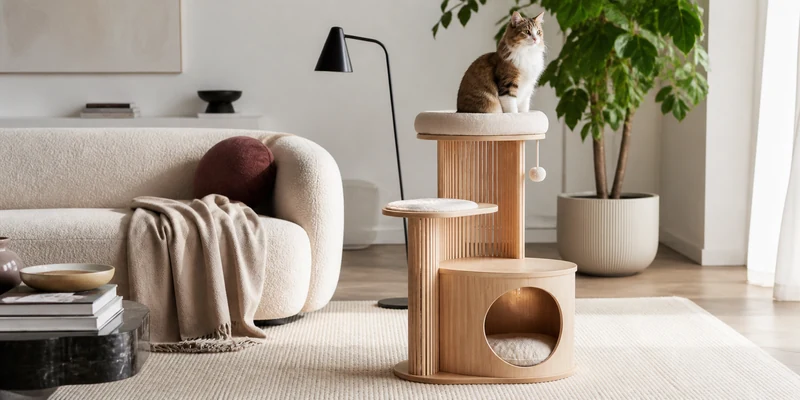
The most obvious strength is restraint. Most cat furniture is built to look exciting in a product photo: bright carpet, plush trim, a shape that shouts “pet product.” Tuft + Paw goes the other way, with plain silhouettes, muted colors, and visible wood grain. In a studio apartment or a living room with no spare corner, that difference is the whole point.
The second strength is that the pieces are built around cat behavior rather than shelf appeal. Scratching surfaces are tall enough for a full stretch, litter boxes are sized for cats to turn around comfortably, and enclosed beds have a single opening rather than a maze. None of that is exotic, but plenty of cheaper products get it wrong.
Build quality is the third theme in owner feedback. Reviews consistently mention solid materials and clean finishing, especially on the litter boxes and felt beds, and soft components mostly come off for washing.
Where Tuft + Paw Falls Short
Price is the loudest complaint, and it is a fair one. You are paying for design work, small production runs, and direct-to-consumer margins, not for more cat furniture. A mass-market tower will give your cat more levels and more sisal for a fraction of the outlay. If your cat spends its days in a spare room nobody sees, that trade is hard to justify.
Durability is not uniformly excellent across the lineup. The Milo tower in particular draws scattered owner reports of connections loosening over time, a familiar issue on tall pole-based designs that stings more at this price. Our notes on cat furniture safety and tip-over risk apply to premium pieces exactly as much as to budget ones.
Then there is the risk every cat owner knows: your cat may simply ignore it. Reviews for the beds and caves include a steady minority of owners whose cats never adopted the piece, which makes a premium purchase a more expensive gamble. Availability is limited too, since most of the catalog sells only through the brand’s own site.
How It Compares to Other Design Brands
Within the design tier, Tuft + Paw sits at the minimal, Scandinavian end. The Refined Feline leans traditional and furniture-like, with larger wooden towers and litter box cabinets that read as case goods; see our Refined Feline review. Hepper holds the accessible middle ground, with a smaller catalog, wide marketplace availability, and a mid-century look, covered in our Hepper review.
Put simply: Tuft + Paw is the design-forward option, The Refined Feline is the built-in-furniture option, and Hepper is the compromise for the aesthetic without the full premium commitment. Our overview of designer cat furniture brands lays out the rest of the field.
Where to Start in the Lineup
How we chose: we compared the lineup on depth of owner feedback, functional advantage over cheaper equivalents, and availability. On that basis one product stands out as the sensible first purchase.
If you are hesitant about spending this much on cat gear, start with a piece that solves a daily annoyance rather than a decorative one. A litter box you clean every day earns its keep faster than a bed your cat might refuse.
🏆 Best Overall
The brand’s best selling piece and the easiest one to recommend: a high-sided, open-top litter box in anti-stick plastic with cleaning tools built into the design. It is the rare premium pet product that makes a chore measurably less annoying.

Who It Is For, and Who Should Skip It
Buy it if your cat furniture lives in a room guests actually see, if you rent an apartment with no place to hide a tower, or if you have already replaced cheap cat furniture twice. Design-conscious owners who would otherwise put nothing out often end up with a better setup here, because they finally give the cat a piece instead of hiding the problem.
Skip it if price per square inch is your measure. Budget shoppers are better served by mass-market brands, where the same money buys a much taller tower or two pieces instead of one. Multi-cat households hit the limits of a premium budget fast, since three cats want three perches.
If you like the look but not the outlay, our guide to Tuft and Paw alternatives covers the brands that get closest to the aesthetic at a lower price.
Alternatives and Other Pieces Worth Comparing
These are the two other pieces that come up most often in owner discussions, plus one lower-cost alternative for the design look without the premium commitment.
🐈 Best for Climbers
The brand’s take on a cat tower: a tall sisal-wrapped pole with removable, washable platforms and a hammock element. Handsome and functional, though tall pole designs benefit from periodic tightening.
🛋️ Also Great
A domed, enclosed bed in wool felt with a single opening, aimed at cats that prefer to sleep hidden. It works as an object in a room in a way most covered beds do not, but as with any bed, your cat gets the final vote.
💛 Best Value
For the modern silhouette at a far more accessible price: a molded, bowl-shaped bed with a removable liner, widely available and much easier to buy on impulse. A sensible way to test whether design-led cat furniture actually earns a spot in your home.

Looking for a climbing structure rather than a bed or box? Our roundup of modern cat trees compares this tier against the affordable designs that mimic it.
Frequently Asked Questions
Is Tuft + Paw a legitimate brand? Yes. It is an established Canadian design company that has been selling cat furniture and accessories since 2016, alongside a large published library of buying and behavior guides.
Where can I buy Tuft + Paw products? Most of the catalog sells directly through the brand’s own website. The Cove litter box also appears on Amazon, which is currently the main exception.
Is Tuft + Paw worth the money? It depends on where the furniture will live. In a visible, shared space the design premium buys something real. In a spare room, a mass-market equivalent does the same job. See our alternatives guide if price is the sticking point.
What if my cat ignores the piece I bought? That happens with any bed or tower, at any price. Check the return window before ordering, and try placement changes first: near a window, or next to where your cat already sleeps.
Is it stable enough for a big cat? The heavier pieces are built for adult cats, but tall pole-based towers should be checked and tightened periodically, and wall anchoring is worth considering for large or very active cats.
The Bottom Line
Tuft + Paw makes unusually good looking cat furniture with real thought behind the shapes and materials, and the Cove litter box is the piece that most consistently justifies its price. The trade-off is a design premium paid in exchange for less size and less marketplace convenience than mass-market brands offer. If your cat gear has to share a room with your actual furniture, it is worth the money; if it does not, it probably is not.
See where to start in the lineup