Last updated: August 8, 2026
Most people searching for Tuft and Paw alternatives are not looking for a different aesthetic. They have already decided they want the clean wood, the muted felt, and the cat gear that does not announce itself from across the room. What they want is a way to get there without a premium direct-to-consumer bill, or without waiting on a brand that sells almost nothing through the marketplaces they already shop.
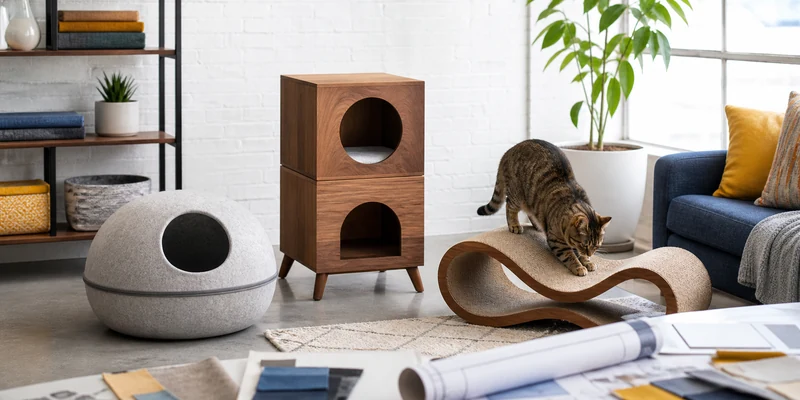
The good news is that the look has spread. Several brands now build in the same visual language at different points on the scale, from furniture-grade wooden towers down to wood-look panels with sisal posts that cost a fraction as much. This guide covers five of them, what each one replaces in the Tuft + Paw lineup, and where the compromise actually shows up.
This article contains affiliate links. If you buy through them, we may earn a commission at no extra cost to you. Learn more.
Quick Answer
What should you buy instead of Tuft + Paw?
- For a wooden climbing tower with real height, The Refined Feline is the closest widely available substitute, and it sells through the marketplaces Tuft + Paw mostly does not.
- For the design look at a mass-market price, Vesper and Feandrea’s wood-look models get you most of the way there in materials, if not in finishing.
- For beds and wall space, Hepper and Fukumaru cover the two pieces Tuft + Paw shoppers most often end up buying elsewhere anyway.
Five Alternatives, Compared
Use this to work out which brand replaces the piece you were actually looking at. None of them copies the full Tuft + Paw catalog, so most people end up mixing two.
| Brand | Closest to | What you gain | Where it gives ground |
|---|---|---|---|
| The Refined Feline | Towers, condos, litter box furniture | Furniture-grade wooden pieces with real climbing height, sold through Amazon, Chewy, and Wayfair | Heavier styling; still a premium buy, not a budget one |
| Hepper | Beds, caves, low scratchers | Molded shells on wooden legs, washable liners, easy marketplace availability | No climbing towers or wall systems; small catalog |
| Vesper | Compact towers and cubes | Walnut-look panels, natural sisal, and a modern silhouette at a mainstream price | Veneer finishing; smaller platforms than a full tower |
| Feandrea | Entry-level towers | The most affordable route into wood-look design, with plenty of sisal per piece | Design details are approximate; plush surfaces on many models |
| Fukumaru | Wall shelves and perches | Wood-and-felt wall components that keep floor space free | Installation depends on your studs; not an option in every rental |
If you are still mapping out the category rather than replacing one specific product, our guide to modern cat furniture covers the full landscape, and our Tuft + Paw review explains what the brand does well before you rule it out.
What You Are Actually Replacing
It helps to name the thing you liked. Tuft + Paw’s appeal comes down to four ingredients, and different alternatives hit different ones.
- Restraint in the silhouette. Plain shapes, no bright carpet, no plush trim. The easiest quality to buy elsewhere, and the cheapest.
- Honest materials. Birch plywood, wool felt, natural sisal, powder-coated metal. Alternatives usually swap multi-ply wood for veneer over engineered board, which looks similar and holds up fine indoors.
- Cat-first proportions. Scratching surfaces tall enough for a full stretch, beds with a single clear opening. Cheaper pieces cut here first, and it is the cut that matters most.
- Finishing quality. Edge banding, hardware, and how a piece feels up close. Most visible in person, least visible in photos.
Put bluntly: you can replace the look for very little and the proportions for a moderate amount. Replacing the finishing is what still costs real money.
How to Judge an Alternative
Design-adjacent listings are easy to fake in a product photo, so a few concrete checks separate a genuine alternative from a rebranded box.
Look at the scratching surface, not the finish. A handsome wooden piece with a token strip of sisal will not redirect a cat away from your couch arm. You want at least one post tall enough that your cat can reach up and pull down at full extension, wrapped in natural sisal rather than carpet.
Check the base against the height. Tall and narrow is the combination that sways. A wide, weighted base does more for stability than any material claim, and anything genuinely tall should have an anchoring option. Our overview of cat furniture safety covers tip-over risk in more detail.
Confirm the soft parts come off, and read the return policy first. Washable liners are a large part of why premium pieces stay presentable, and alternatives that glue their fabric down age badly around a shedding cat. Cats also reject beds at every price, and marketplace returns are usually simpler than direct-to-consumer returns.
Our Top Picks at a Glance
How we chose: we compared design-led cat furniture on materials, stability, scratching surface, availability, and how closely each piece lands on the Tuft + Paw look. Selections lean on manufacturer specifications and the patterns that come up repeatedly in owner reviews.
Two things worth saying up front. Nothing here is a clone, so expect to trade one quality for another rather than getting the same piece cheaper. And if a specific Tuft + Paw item is the only thing you want, the brand’s own return window may be the cheaper experiment than buying two substitutes.
🏆 Best Overall
A tall wooden climbing tower with curved plywood construction, a sisal post, and cushioned platforms. It is the closest thing to a design-brand tower that you can order from a mainstream retailer and return without friction.

💛 Best Value
A modern wooden tower with natural sisal posts for a small share of premium money. The most accessible way to move away from a carpeted tower without redecorating around it.

⭐ Upgrade Pick
An enclosed wood hideaway that doubles as a side table, reading as furniture first and cat gear second. Worth it in an open-plan room where a tower would dominate the sightline.

Small Apartments, Studios, and Rentals
In a studio apartment the constraint is rarely money, it is that the cat furniture has to live in the same room as everything else. That is the problem Tuft + Paw was built for, and it is also where cheaper alternatives compete best, because a compact piece has fewer surfaces to get wrong.
Two moves work well here. Go vertical rather than wide, since a slim tower or a wall route gives a cat height without eating floor area. And keep the palette to one wood tone across pieces, which does more for a coordinated room than any single product does.
Renters have a third constraint: anchoring. If your lease rules out anchor screws, favor a lower piece with a wide, weighted base over a tall tower you cannot secure. We cover the workarounds in our guide to cat furniture for renters. For tight rooms, mid-century modern cat furniture reads lightest, because legs leave visible floor underneath.
Large Cats and Multi-Cat Homes
Design-led furniture is generally built to an average cat, and that assumption breaks with a Maine Coon or a household of three. This is the one area where trading down from a boutique brand can help you, since mass-market towers are often larger and cheap enough to buy in pairs.
Check platform depth rather than trusting styled photos, since a perch that looks generous can be tight for a cat who likes to sprawl, and verify weight ratings on anything wall-mounted. In a multi-cat home, two mid-height pieces in different rooms usually beat one tall showpiece, because a single good perch creates a single point of conflict.
If height is the priority, a purpose-built modern cat tree gives you more usable levels than a condo, and our roundup of aesthetic cat trees covers the models that manage size without looking like gym equipment.
Beds, Wall Space, and the Rest of the Setup
Very few people replace their whole Tuft + Paw shortlist with one brand. Most buy a tower from one place and then need a bed, a wall route, or a litter solution from another. These are the pieces that come up most often.
🛏️ Best for Beds
A molded bowl-shaped bed on slim legs with a removable, washable liner. It is the most direct stand-in for a premium felt cave or pod, and it is easy to buy and easy to send back if your cat shrugs at it.

🧗 Best for Small Spaces
A compact cube in walnut-look panels that doubles as a scratch and lookout spot. Less climbing height than a full-size tree, but it fits beside a sofa and does not read as a pet product.

🧱 Best for Wall Space
A set of wooden wall shelves that build a climbing route without using any floor. The strongest option in homes where there is genuinely nowhere to put a tower.

On beds, temperament decides more than styling: elevated pods suit cats who like to survey a room, while burrowers want something covered at floor level. Our roundups of modern cat beds and luxury cat beds sort the options by sleeping style, and our Fukumaru shelves review takes a closer look at that wall system.
Litter is the one gap none of these brands fills neatly. The Cove is the Tuft + Paw piece most people are trying to replace, and the honest substitutes fall into two camps: a plain high-sided box with a non-stick interior, or a cabinet that hides a standard box inside a piece of furniture. Our guide to litter box furniture covers the second route, including the ventilation questions a cabinet does not solve by itself.
Placement, Assembly, and Upkeep
Placement first, because it decides whether any of this gets used. Cats favor elevated spots that overlook something interesting, so a tower near a window will be used far more than the same tower in a hallway. Keep at least one piece in the room where your household actually spends its evenings.
Assembly is where budget alternatives are won or lost. Tighten fasteners in stages instead of fully seating each one in turn, which keeps panels square and prevents the small racking that turns into wobble a month later. Check bolts again after a couple of weeks, then once a season; cheaper hardware loosens sooner.
Upkeep is simple. Wipe wood veneer with a barely damp cloth and dry it immediately, since standing moisture lifts veneer edges. Vacuum sisal with an upholstery attachment and trim loose fibers rather than pulling them. Wash removable liners gently and air dry them, because heat is what shrinks felt out of shape.
Common Mistakes to Avoid
- Shopping the listing title. Plenty of products use words like modern or minimalist with no matching detail. Look at the photos for wood tone, edge finishing, and sisal coverage, then read the specifications.
- Assuming cheaper means the same piece for less. The savings come from somewhere, usually finishing, platform size, or hardware. Decide which of those you can live with before you order.
- Buying one showpiece for a multi-cat home. Two modest pieces in different rooms serve three cats better than one tall tower everyone has to share.
- Forgetting the scratching surface. A design piece with almost no sisal will not stop couch scratching. Budget for a proper post alongside it.
- Skipping the anchor strap. Especially on tall, narrow pieces, in homes with kittens, or with a heavy cat who lands hard.
Where to Go From Here
Not sure you want to leave the premium tier at all? Read our Tuft + Paw review for where the money goes, then compare it against our Refined Feline review and Hepper review, which cover the two closest brands in depth. For the wider field, our overview of designer cat furniture brands maps the premium and mid-tier makers. And if scratching is the problem you are really trying to solve, a modern scratching post is usually the cheapest fix on this page.
Frequently Asked Questions
Which brand is the closest alternative to Tuft + Paw? The Refined Feline for towers, condos, and litter box furniture, and Hepper for beds and low scratchers. Between them they cover most of what Tuft + Paw shoppers are looking at, and both sell widely through mainstream retailers.
Why is Tuft + Paw so hard to find in stores? The brand sells almost entirely direct through its own site. The Cove litter box is the main exception and also appears on Amazon, which is one reason people look for alternatives they can buy alongside everything else.
Can I get the same look from a mass-market brand? Visually, mostly yes. Wood-look panels with natural sisal from brands like Vesper and Feandrea land close in a photo. Up close, edge finishing and hardware are where the difference shows.
Are cheaper alternatives less stable? Not automatically, but the margin for error is smaller. Favor a wide, weighted base relative to the height, retighten hardware periodically, and use an anti-tip strap where one is supplied. See cat furniture safety for the full checklist.
What works if I have no floor space? A wall route. Wood-and-felt shelf systems give a cat real vertical territory without a footprint, though you need to hit studs or use rated anchors. Start with our guide to cat wall shelves.
The Bottom Line
You can get most of the Tuft + Paw look for far less, as long as you are clear about which part you are replacing. The Refined Feline is the closest substitute for towers and furniture-style pieces, Hepper covers beds, and Vesper, Feandrea, and Fukumaru handle compact towers and wall routes at mainstream prices. Judge any alternative on sisal coverage, base width relative to height, and whether the soft parts come off to wash.