Last updated: August 8, 2026
An orthopedic cat bed is a bed built around a slab of supportive foam, usually memory foam, instead of the loose polyester fill you get in a standard cushion. That is the whole idea in one sentence, and it is worth saying plainly, because “orthopedic” is a product description in the pet world rather than a regulated or medical term. Nobody has to prove anything to print it on a label. What separates a genuinely supportive bed from a fluffy one with a sticker is the foam underneath and how easy it is for your cat to get on and off.
That matters most for the cats who are picking their sleeping spots more carefully than they used to: older cats who have started using the ottoman as a halfway step to the couch, big cats whose weight compresses a thin cushion down to floor level, and cats who sleep on hard floors. This guide covers the two specifications that actually change how a bed feels, foam thickness and entry height, plus how to size one for a cat rather than a small dog. If your cat’s movement has changed noticeably, that is a conversation for your veterinarian first; a bed is a comfort upgrade, not an answer to a mobility question.
This article contains affiliate links. If you buy through them, we may earn a commission at no extra cost to you. Learn more.
Quick Answer
What actually makes an orthopedic cat bed worth buying?
- Look for a solid foam base rather than shredded fill, ideally around three inches or more of it, so a sleeping cat does not compress it flat against the floor.
- Keep the step-in height low. One open or dipped side that a stiff cat can walk over matters more than the plushest bolster on the market.
- Buy the washable version. A removable, machine-washable cover with a waterproof liner is the difference between a bed that lasts years and one you throw out.
Orthopedic Cat Bed Buying Criteria at a Glance
Five specifications do most of the work here. Everything else, including color, shape, and how it photographs, is secondary. Use this as your checklist while you compare listings.
| Criterion | What to look for | Why it matters |
|---|---|---|
| Foam type | Solid memory foam base, not shredded or chipped fill | A single slab spreads weight evenly. Shredded fill shifts to the edges and leaves a hollow |
| Foam thickness | Roughly 3 in or more under the sleeping area | Thin pads bottom out under a sleeping adult cat, which removes the point of buying foam |
| Entry height | One low, open, or dipped side, a few inches from the floor | Stiff or heavy cats step in rather than jump in. A tall bolster all around can make a bed unpopular |
| Surface size | Room for your cat stretched out, not just curled | Cats who sprawl need more surface than the curl-up donut format offers |
| Cover and liner | Removable machine washable cover plus a waterproof inner liner | Foam cannot go in the washer. The liner is what protects it from accidents and cleanup |
If several of these look familiar, that is because the same checklist runs through most of the soft goods category. Our hub guide to cat beds works through the other formats, and if warmth rather than support is your cat’s real preference, the heated cat bed roundup covers that side.
Foam Thickness and Density: The Two Numbers That Matter
Thickness is the specification most listings do give you, and it is the fastest filter. Under about two inches, a foam pad behaves like a thin mat once a cat settles onto it, because the weight concentrates on hips and shoulders and squeezes the foam down to nothing at exactly those points. Around three inches and up, the foam still has material left to give after it compresses, which is what people mean when they say a bed feels supportive rather than soft.
Density is the number almost nobody publishes, and it is why two beds with identical thickness can feel completely different. Low density memory foam feels luxurious at first and then permanently keeps the shape of a sleeping cat after a few months, leaving a crater. Higher density foam springs back. Since the spec sheet rarely helps, use proxies: the weight of the bed relative to its size, whether the maker states the foam is CertiPUR-US certified, and what owner reviews say about how it holds up after six months or a year. Reviews consistently mention flattening as the main long-term complaint here, so that is the pattern worth reading for.
One more distinction worth catching. Many beds sold as orthopedic use shredded or chipped foam, which is offcut material in a bag. It feels plush, it is cheaper to make, and it migrates under pressure exactly the way polyester fill does. If the listing says shredded, it is a comfort bed rather than a support bed, whatever the title says.
Entry Height and Why Low Sides Beat Deep Bolsters
Here is the practical problem with the standard bolster bed. The bolster is the part that makes a bed look cozy in a photo, and it is also a wall your cat has to climb. A young, agile cat clears it without noticing. An older or heavier cat has to lift a leg over it, balance on a compressing surface, and turn around inside a space smaller than it looked. Some do it happily. Others quietly go back to the rug, and the owner concludes their cat “does not like beds.”
What to look for instead: a bolster that opens on one side, a dipped or scooped front edge, or a flat mat format with no walls at all. Overall bed height matters too. A bed that sits close to the floor asks less of a cat than one raised on a thick base, which is the opposite of what you want from an elevated cat bed, where the point is airflow and height rather than easy access.
Placement does some of this work as well. A supportive bed on the floor beside the couch gives a cat who has stopped jumping to the top of the bookcase somewhere comfortable at ground level, and it pairs well with a low perch or a step. If your cat is clearly finding jumps harder than before, mention it to your veterinarian rather than treating it as a furniture problem; there are plenty of ordinary reasons a cat changes how it moves, and they are worth ruling in or out.
Our Top Picks: Supportive Beds Worth Comparing
How we chose: we compared widely available memory foam cat beds on foam type and stated thickness, how low and open the entry is, whether the cover comes off for washing, and whether the sleeping surface is genuinely sized for a cat. Selections are based on manufacturer specifications and themes that come up repeatedly in owner reviews, not on hands-on assessment.
Two things worth knowing before you click. Foam beds usually arrive compressed in a box and need a day or two to expand fully, so do not judge one the hour it lands. And a new bed often smells like the factory; airing it out before you introduce it saves you the experience of a cat sniffing it once and walking away.
🏆 Best Overall
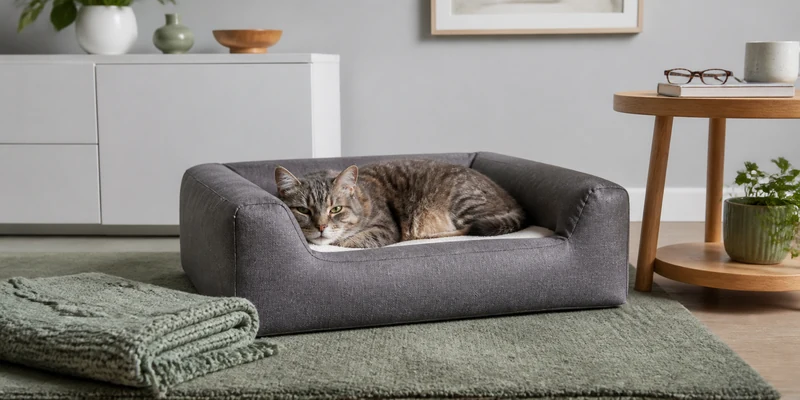
A memory foam lounge with a solid foam base, bolstered sides and an open front, plus a removable washable cover. The open side is what makes it easy to walk into rather than climb into.

💛 Best Value
A plain orthopedic bolster bed in a small size with a foam base and a zip-off cover. Sensible when you want to find out whether your cat takes to foam before spending more.

⭐ Upgrade Pick
A foam bed that adds gentle, low-wattage warmth on top of the support, which is a combination older cats and cold-floor households tend to gravitate toward. Worth the step up if your cat already hunts for the radiator.

Senior Cats, Big Cats, and Cats Who Sprawl
Older cats are the group this category is really aimed at, and their preferences are fairly consistent. They want a warm spot, a low step in, and a surface that does not slide when they shift position. A supportive bed placed somewhere they already sleep, near a heat source and out of the household’s walking route, gets used far more reliably than the same bed put somewhere new and “better.” Owners report that the move goes best when the new bed goes down next to the old sleeping spot for a week before the old one disappears.
Large and heavy cats have a different problem: nearly every bed marketed for cats is sized for an average adult, and a Maine Coon or a solid twenty pound cat will overhang it. The workaround is to shop the small dog beds, where the same brands sell the same foam construction in more useful dimensions. Measure your cat stretched out on the floor, nose to base of tail, and add a few inches. Weight pushes you toward the thicker end of the foam range too.
Then there are the sprawlers. Some cats never curl, they flop sideways with their legs out, and for them a flat mat or an open lounger beats any donut regardless of how supportive it is. Watch how your cat sleeps for a few days before you buy; the shape you need is usually obvious once you look for it.
Two More Beds for Specific Situations
If neither the standard bolster nor the lounger fits your cat, these two cover the situations that come up most often: a cat who needs zero climbing, and a cat who needs more surface than a cat bed provides.
🐾 Best for Low Entry
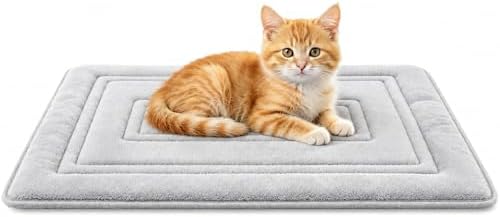
A flat orthopedic mat with a foam core and no raised sides at all, so there is nothing to step over. The simplest option for a cat who has started avoiding anything with walls, and it doubles as a topper for a hard windowsill or a favorite chair.
👍 Also Great for Large Cats
A small dog orthopedic bed in a rectangular format, which gives a big or long-bodied cat room to stretch out on the same foam construction. Also a reasonable pick if two cats share a bed.

If the bed also has to look good in a living room, the design-led end of the category is worth a look rather than settling for beige fleece: see modern cat beds for the clean-lined versions and luxury cat beds for the premium materials and finishes.
Placement, Warmth, and Keeping It Clean
Placement decides whether the bed gets used at all. Cats choose sleeping spots for warmth, safety, and a decent view of the room, in roughly that order. That usually means against a wall rather than in open floor, near a heat source, slightly off the main walking route, and with a sightline to the door. A supportive bed put in a quiet spare room because it looks tidy there tends to stay empty.
Warmth deserves its own note, because foam does not hold heat the way a fleece nest does. A memory foam base can feel cool to lie on, which is why some cats take longer to warm to one. Adding a fleece blanket over the top, or putting the bed on a rug rather than a tile floor, solves it in most homes. If your cat is a genuine heat seeker, a bed with a low-wattage warming element is a more direct fix.
Cleaning is straightforward as long as you buy for it. The cover comes off and goes in the machine on a gentle cycle, and it should go back on slightly damp so it stretches back to shape. The foam core never goes in the washer, so the waterproof liner is what actually protects your purchase. Vacuum the surface between washes and expect to replace a foam bed eventually, since even good foam softens over years of nightly use.
Common Mistakes to Avoid
- Treating the word orthopedic as a guarantee. It is a descriptive label, not a certification. Read the foam construction, not the product title.
- Accepting shredded foam. Shredded or chipped fill migrates under pressure and behaves like ordinary stuffing, no matter how thick the bed looks in the photo.
- Buying the deepest bolster you can find. Tall walls all the way around look cozy and can quietly put off exactly the cat you bought the bed for.
- Sizing to the curled cat. Most cats stretch out at some point in the night. Measure the sprawl, not the loaf.
- Skipping the waterproof liner. One accident on unprotected foam and the bed is finished, since the core cannot be washed.
- Expecting a bed to fix a mobility change. If your cat has started moving differently, jumping less, or sleeping in odd places, ask your veterinarian about it rather than shopping for a solution.
Where to Go From Here
If warmth is really what your cat is chasing, and with older cats it often is, start with the heated cat bed guide, then come back to foam if you want both. If your cat prefers to sleep off the ground and away from drafts, an elevated cat bed answers the same comfort question differently. For a cat who mainly wants a warm spot with a view, a window perch may beat another bed on the floor. Still weighing the formats? The cat bed buying guide lays out the category side by side.
Frequently Asked Questions
What does orthopedic actually mean on a cat bed? In pet products it describes construction, specifically a solid supportive foam base rather than loose fill. It is a marketing term, not a regulated or medical one, so judge the bed on its foam and its entry height.
Do cats need memory foam? Most healthy adult cats sleep happily on anything soft. Foam earns its place with older cats, heavy cats, and cats whose favorite spots are hard floors or thin cushions.
How thick should the foam be? Aim for roughly three inches or more of usable foam under the sleeping area. Thinner pads compress flat under a sleeping adult cat, which defeats the purpose.
My older cat has stopped jumping. Will a supportive bed help? A low, comfortable bed at floor level can make daily life easier, but a change in how your cat moves is worth raising with your veterinarian first rather than treating it as a furniture problem.
Can I use a small dog bed for my cat? Yes, and for large or long-bodied cats it is often the more sensible route, since the same brands offer the same foam construction in dimensions that actually fit. Check that the sides are still low enough to step over.
How do I get my cat to use a new bed? Put it where your cat already sleeps rather than where you want it to sleep, leave the old bedding nearby for a week, and add a familiar blanket on top. Foam beds also need a day or two to expand and air out after unboxing.
The Bottom Line
A worthwhile orthopedic cat bed comes down to two specifications and one habit: a solid foam base around three inches or thicker, an entry your cat can step over rather than climb, and a removable washable cover with a waterproof liner underneath. Size it to your cat stretched out, not curled, and put it where your cat already chooses to sleep. If your cat’s movement has changed, talk to your veterinarian about it; a good bed makes the day more comfortable, and that is all it claims to do.