Last updated: August 8, 2026
A luxury cat bed is an odd thing to shop for, because your cat has no idea what it cost. What the premium end of the market actually sells is material and construction: felted wool instead of polyester fleece, solid hardwood instead of veneered particleboard, woven rattan instead of a molded plastic shell, and parts you can replace instead of a bed you throw away when the liner gives up. Some of that is worth paying for. A fair amount of it is a word added to a listing.
This guide separates the two: the materials that genuinely behave differently over years of use, the construction and service details that decide whether a bed lasts, and the signals that mean a seller is charging a premium for photography rather than for anything under the fabric. It also draws the line with the modern cat bed category, because those two searches overlap without being the same thing.
This article contains affiliate links. If you buy through them, we may earn a commission at no extra cost to you. Learn more.
Quick Answer
What are you actually paying for in a luxury cat bed?
- Materials that age well rather than flatten: felted wool, solid wood, rattan or cane, high density foam, and woven upholstery fabric instead of glued fill and thin plush.
- Serviceability. Replaceable liners, removable covers, and hardware you can tighten are what turn an expensive bed into a bed you still own in five years.
- Not comfort, necessarily. Cats choose sleeping spots by warmth, cover, and sightline, so a premium bed in the wrong spot loses to a cardboard box every time.
Premium Cat Bed Materials at a Glance
Almost every bed marketed as luxury is built around one of these materials. This is what each one buys you, and what it asks in return.
| Material | Why it costs more | What it does for your cat | Trade-off to watch |
|---|---|---|---|
| Felted wool | Natural fiber, labor intensive to felt, usually made in smaller runs | Breathes, handles moisture well, holds a shaped cave without a stiff frame, and takes claws without shredding | Rarely machine washable; spot cleaning and airing are the normal routine |
| Solid wood | Real hardwood costs several times what veneered engineered board does | Legs and frames that stay rigid for years and can be re-tightened rather than stripping out | Heavy, and a wood frame alone tells you nothing about the cushion inside it |
| Rattan, cane, and seagrass | Hand woven, so labor rather than material is the cost | Airflow in warm rooms, a bowl shape with real structure, and a surface many cats like to knead | Loose ends can catch claws; check the weave is tight and finished |
| High density foam | Denser foam is more expensive per inch and holds its shape under load | A base that does not bottom out, which suits older and heavier cats | Sold as orthopedic, which is a product description rather than a treatment |
| Woven upholstery fabric | Bouclé, tweed, and performance weaves are furniture grade rather than pet aisle grade | Resists pilling and looks like furniture in a room you actually sit in | Confirm the cover unzips; a beautiful fabric you cannot wash is a short term purchase |
| Molded shell with liner | Tooling for a molded form, plus a separately manufactured insert | An enclosed, supported shape that keeps its form, with the only washable part being the liner | Only worth it if replacement liners are actually sold |
If you have not settled on a format yet, start with our hub on cat beds, which covers donut, cave, bolster, elevated, and heated styles and how to match one to the way your cat sleeps. This guide assumes you already know the shape you want and are deciding how much material quality is worth to you.
What Actually Justifies the Premium
Four things separate a bed that earns its price from one that simply has a price.
Materials that recover instead of compressing. The biggest difference between a cheap bed and an expensive one shows up after six months. Loose polyester fiberfill mats down into a thin pad and never comes back, while denser foam and felted wool hold their structure under a cat that lies in the same spot every day.
Parts you can replace. This is the most underrated buying signal in the category. A molded or wooden bed whose liner is sold separately can be refreshed for years, and a wool cave that can be brushed and shaved when it pills stays presentable. A bed with a sewn-in cushion and no spare available is disposable regardless of what it is made from, so check whether the manufacturer lists replacement liners or covers at all.
Construction you can inspect. Look for sewn-through seams rather than glued edges, zippers with a fabric flap over them, threaded metal inserts in wood rather than screws driven straight into board, and felt pads on the feet. On woven pieces, the tell is the rim: a tightly bound edge lasts, an open weave end unravels the first time a cat hooks a claw in it.
Support after the sale. Brands worth their positioning publish real dimensions, sell spare parts, and answer questions about materials, which is a meaningful difference from a marketplace listing that will not exist next season. Our overview of designer cat furniture brands covers who is actually designing and manufacturing rather than rebranding.
What Is Just Marketing
Luxury is a keyword, not a specification, and sellers know exactly which words trigger a higher price expectation. These are the ones worth ignoring.
- “Plush”, “faux fur”, and “cloud”. Descriptions of a surface texture, usually applied to standard polyester on standard fill. Nice to touch, not evidence of anything structural.
- Calming, anti-anxiety, and stress-relief language. Enclosure and a raised rim do help nervous cats feel covered, which is a shape benefit available at every price. It is not a property of an expensive fabric.
- Gold-tone hardware and decorative feet. Trim adds visible cost and no life span. Check what the legs are made of, not what color they are.
- Memory foam as a headline. Density and thickness decide whether foam supports a cat, and a thin memory foam topper over soft filler behaves like soft filler. If support is the goal, our orthopedic cat bed guide explains what to look for in the foam itself.
- Vague provenance. “European design”, “artisan crafted”, and “boutique” are unregulated phrases. A brand that genuinely uses solid oak or undyed wool will name the material plainly.
None of this means premium beds are a con. It means the price tells you almost nothing on its own, while the material list, the spare parts page, and the dimensions tell you nearly everything.
Luxury Versus Modern: Two Different Searches
These categories share a lot of shelf space and get confused constantly, but they answer different questions. Modern is about form: clean lines, restrained color, a shape that suits a minimal room. A modern bed can be inexpensive, and plenty of them are molded plastic or basic wood in a good silhouette. Our modern cat bed roundup is the right place to start if what you want is the look.
Luxury is about substance: what the thing is made of, how it is put together, and whether it survives being lived with. A hand-woven rattan basket is not especially modern, and a wool felt cave in a traditional dome shape is not modern at all, yet both sit firmly at the premium end. Plenty of beds are both, which is why the two lists overlap, but you should know which one you are actually buying for.
A useful test: if you took the bed out of the styled photo and put it in a plain room, would you still want it? If yes, you are buying materials. If the appeal comes from how it completes the scene, you are buying design, and the modern category will serve you better for less. For the wider design-led market across trees, shelves, and litter cabinets, the modern cat furniture hub maps the whole landscape.
Our Top Picks at a Glance
How we chose: we compared premium cat beds on material quality, construction, whether replacement parts exist, usable interior size, and how well the design holds up in a room you actually use. Selections are based on manufacturer specifications and the patterns that come up repeatedly in owner reviews, not on lab measurements.
Two things before the list. Premium beds are usually sold in fewer sizes than mass-market ones, so measure your cat curled up and check the interior rather than the outside dimensions. And a bed at this level is a long-horizon purchase, which means the spare parts question matters more than the fabric swatch.
🏆 Best Overall
A felted wool cave in a natural tone, the material that best justifies a premium in this category. Wool breathes, handles moisture, and keeps a shaped opening without a stiff internal frame, and it takes a cat’s claws far better than felt-look polyester.

💛 Best Value
The most accessible way into the premium segment: a design led nest bed with a fleece liner that lifts out and goes in the machine. The washable liner is the reason this one keeps working long after a sewn-in bed would be finished.

⭐ Upgrade Pick
A design-house cat bed built the way furniture is built: a structured covered cave in a matte mid-century finish, from a furniture maker rather than a pet brand. For a visible room where the bed has to hold up next to your own furniture.

Curious whether these brands earn their positioning? We go through them individually in our Tuft + Paw review and Hepper review.
Premium Beds That Read as Furniture
The picks above are soft goods first. These three are pieces of furniture that happen to be beds, which is usually what people mean when they want something premium for a living room. Expect real wood or real weave, and expect to look after them accordingly.
🪑 Best for Visible Rooms
A woven sphere bed raised on a wooden stand, so the cat gets an enclosed bowl with a view out and the room gets something that looks deliberate. Check that the cushion inside is removable before you commit.

🌾 Best for Natural Materials
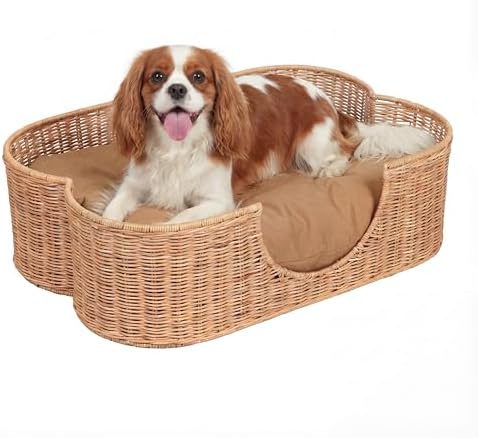
A hand-woven rattan or seagrass basket with a washable cushion, the warm-weather answer in this category since the weave breathes rather than trapping heat. Look for a tightly bound rim with no loose ends for claws to catch.
✨ Also Great
A solid wood frame bed raised on slim legs, with a cushion that lifts out, which keeps the cat off a cold floor and away from foot traffic while looking like a small piece of furniture rather than pet gear.

Raised frames have a second benefit worth knowing about in busy households, which our roundup of elevated cat beds goes into. And if tapered legs and warm walnut tones are the look you are after across the whole home, mid century modern cat furniture covers the trees, condos, and cabinets in the same language.
Will Your Cat Actually Care?
Honestly, not about the price. Cats choose sleeping spots by warmth, cover, and what they can see from them, none of which correlates with what a bed cost. That is not an argument against buying a good one, but it does change what you should optimize for.
Get the interior size right first. Premium beds are often designed around a shape rather than a size chart, and a sculptural cave or a woven bowl can be tighter inside than it looks. Measure your cat curled up and compare that against the usable interior. Larger breeds frequently need the biggest size a design brand offers, and sometimes that brand does not make one.
Put it where your cat already sleeps. The sunny patch, the end of the sofa, the corner of your bedroom. A beautiful bed in a spare room stays empty. Set it down with a blanket or worn t-shirt that already smells of home and leave it alone for a week, since lifting a cat into a new bed reliably backfires.
Warmth still beats materials. In a cold room, a cat will pick the warm surface over the well-made one nearly every time. If your home runs cold or your cat is older, a gentle warming bed may simply get more use, which our heated cat bed guide covers along with the safety points that come with a powered bed. And because a bed needs no installation, it stays one of the few design pieces you can buy without touching the walls, a point we return to in cat furniture for renters.
Caring for Wool, Wood, and Rattan
Premium materials mostly need different care rather than more of it, and getting this wrong is the fastest way to ruin an expensive bed.
Felted wool. Do not machine wash it unless the maker explicitly says you can, since agitation and heat felt it further and shrink it out of shape. Vacuum with an upholstery attachment, spot clean with cool water and a wool-safe detergent, press the moisture out with a towel rather than wringing, and air dry away from a radiator. Pilling is normal and comes off with a fabric shaver.
Solid wood. Wipe with a barely damp cloth and dry immediately, because standing moisture raises the grain and lifts any finish. Re-tighten the leg fixings once or twice a year; that alone is most of the difference between a wooden bed that lasts a decade and one that develops a wobble.
Rattan, cane, and seagrass. Vacuum the weave, dust it with a dry brush, and keep it out of prolonged direct sun, which makes natural fibers brittle. Trim a snagged strand flush with scissors rather than pulling it, and never soak a woven bed.
Covers and liners. Gentle cycle, no fabric softener, air dry. Softener leaves a residue and a scent that puts some cats off a bed entirely. Buy the spare liner when you buy the bed if one is offered, because design brands rotate stock and a discontinued liner turns a repairable bed into a disposable one.
Common Mistakes to Avoid
- Treating price as a proxy for quality. Read the material list and the construction details. Two beds at the same price can be solid oak and printed particleboard.
- Not checking whether spare parts exist. A premium bed without a replacement liner or cover is a premium disposable.
- Buying a shape your cat does not use. An enclosed wool cave is wasted on a cat that sleeps flat on its side in the middle of the floor.
- Machine washing wool. The most common way an expensive cave bed gets destroyed in its first month.
- Assuming design means sturdy. Slim legs and sculptural bases still need to stay stable when a cat lands on the rim, a point we cover in cat furniture safety.
Where to Go From Here
If the look matters more than the material, the modern cat bed roundup narrows the design end without the premium markup. To judge the brands before the products, read our takes on Tuft + Paw and The Refined Feline. And if material honesty is what drew you here, the same reasoning about solid timber versus veneered board applies to towers, which we go through in solid wood cat trees.
Frequently Asked Questions
Is a luxury cat bed worth it? It is if you are buying materials and serviceability rather than a label. Felted wool, solid wood, dense foam, and a replaceable liner outlast polyester fill and glued seams; a premium price with none of those attached buys nothing your cat can detect.
Will my cat use an expensive bed more than a cheap one? No. Cats choose by warmth, cover, and sightline, so placement and shape decide usage. Buy the premium bed for how long it lasts and how it looks, then put it where your cat already sleeps.
What is the difference between a luxury and a modern cat bed? Modern describes form: clean lines and a minimal silhouette, at any price. Luxury describes substance: what it is made of and how it is built. Our modern cat bed guide covers the design-led end specifically.
Can you wash a wool cat cave? Usually not in a machine. Heat and agitation shrink and further felt the wool. Vacuum it, spot clean with cool water and a wool-safe detergent, press out moisture with a towel, and air dry away from direct heat.
Are rattan cat beds safe? They are fine when the weave is tight and the rim is bound, so there are no loose strands for claws to catch. Trim any snag flush rather than pulling it, and skip open, unfinished basketwork if your cat is an enthusiastic chewer.
Does a premium bed help an older or stiffer cat? A denser foam base that does not bottom out and a low entry edge do make a bed easier to settle into, which is comfort rather than treatment. If your cat has become noticeably stiff, reluctant to jump, or has changed its sleeping habits, talk to your veterinarian.
The Bottom Line
A luxury cat bed is worth the money when the premium sits in the materials and the construction: felted wool, solid wood, a tight weave, dense foam, and a liner you can replace when it wears out. It is not worth it when the premium sits in the adjectives, since plush, calming, and artisan describe nothing you can check. Buy for the material list and the spare parts page, then let placement decide whether your cat agrees with you.