Last updated: August 8, 2026
Shopping for a modern cat bed usually starts with a small act of interior design frustration. The bed your cat sleeps in sits in the living room, in full view of the sofa, and it is a fuzzy leopard print donut or a gray fleece cube with a paw print embroidered on the side. Your cat is delighted. You have started nudging it behind the armchair whenever someone comes over.
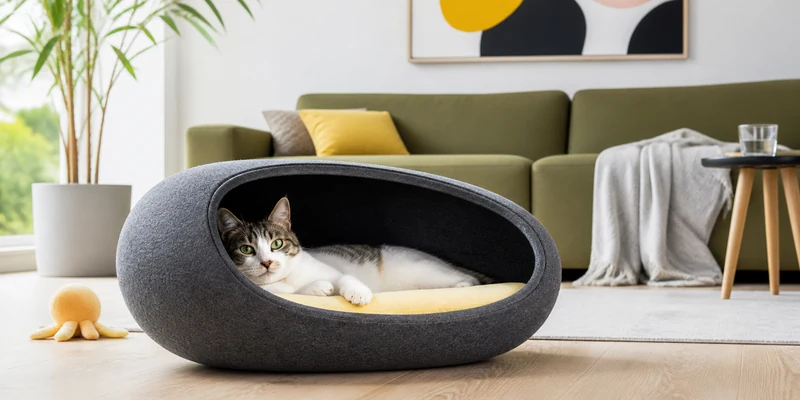
Modern beds answer the same set of feline requirements, a shape to curl into, a surface that holds warmth, walls that feel secure, using molded shells, bent plywood, felted wool and tapered wooden legs instead of novelty fabric. This guide covers what actually separates a designed bed from a plain one with a wood grain sticker, which details decide whether your cat sleeps in it or beside it, and picks from the design tier down to the accessible end.
This article contains affiliate links. If you buy through them, we may earn a commission at no extra cost to you. Learn more.
Quick Answer
What makes a modern cat bed worth buying?
- Buy the shape your cat already sleeps in. A curler wants a shell or a cave with a rim to lean on; a sprawler wants a flat lounger, and no amount of styling changes that.
- Check the interior, not the silhouette. Design beds photograph small on purpose, and a deep molded rim eats into the usable space more than the outside dimensions suggest.
- Insist on a removable, washable liner or cover. Molded shells and wooden frames last for years, but the soft part is what gets slept on and shed into.
Modern Cat Bed Shapes Compared
Modern covers several quite different forms, and the shape you pick decides far more about whether the bed gets used than the brand does. These are the six directions you will run into while shopping.
| Shape | What it looks like | Suits which cat | Trade-off to expect |
|---|---|---|---|
| Molded shell on legs | Curved bowl or nest shape in a rigid outer shell, soft liner inside, tapered wood legs | Curlers who like a rim to tuck against and a bit of lift off the floor | Interior is drawn around an average cat, so large breeds tend to overhang |
| Hooded pod | Enclosed shell with a round opening, roof included, usually a matching liner | Shy cats, easily startled cats, and homes with dogs or children | Some cats refuse anything covered, and hoods trap heat in a warm room |
| Felted wool cave | Dense wool dome in an undyed or muted tone, holds its own shape | Burrowers and cats that sleep in closets and paper bags | Wool needs careful hand washing and can felt further if it gets hot |
| Legged wooden frame | Open wood or plywood frame with a cushion dropped inside, reads as furniture | Cats that want to see the room while they sleep | Open sides give less of a sense of enclosure than a shell does |
| Woven rattan or seagrass | Basket dome or open basket with a fitted cushion, natural fiber texture | Cats who like texture underfoot and something to nibble and lean on | Woven fiber snags claws and is difficult to clean thoroughly |
| Low mat or lounger | Flat pad or shallow tray in wool, boucle, or a plain neutral weave | Sprawlers, hot rooms, and spots where a bulky bed will not fit | No walls at all, so it offers no sense of shelter |
If you are not yet sure which of these your cat is asking for, the hub guide to cat beds works through sleeping posture, size, and washability across every format, including the ones this article skips on looks alone.
What Actually Makes a Cat Bed Modern
Plenty of listings use the word without earning it, so it helps to judge the specifics rather than the styling. Three things reliably separate a designed bed from a rebranded one.
- Material honesty. A genuine molded shell, real plywood or solid wood legs, wool or recycled PET felt, natural fibers. Printed wood grain on plastic photographs beautifully and then peels at the edges where a cat steps in and out every day.
- A restrained silhouette. One clean form, no contrast piping, no embroidered faces, no dangling toy on a spring. That restraint is the entire design brief, which means the shape has to do all the work and it has to be the right shape for your cat.
- A palette that belongs in a room. Cream, oatmeal, charcoal, mid wood tones. Pale gray and white are the easy choices and they show every hair, so a mid tone usually looks intentional for longer.
It is worth being clear about the difference between modern and premium, because the two words get used interchangeably in listings and they are not the same thing. Modern is a statement about form: the silhouette, the restraint, the way the piece sits in a room. Luxury is a statement about materials and finish, which is why a hand felted wool cave or a bed in furniture grade hardwood can be luxurious without looking especially modern. Our roundup of luxury cat beds covers that premium end, where the spend goes into the material rather than the shape. The two categories overlap in the middle, and several of the picks below sit in that overlap.
Brand positioning follows the same split. Hepper, Tuft + Paw and The Refined Feline design short catalogs for people who want the piece on display, while mainstream brands chase the look at accessible prices. Our overview of designer cat furniture brands maps who makes what, and the wider modern cat furniture guide covers how a bed fits alongside the tree, the shelves, and the litter storage.
The Details That Decide Whether Your Cat Uses It
A beautiful bed your cat walks past is an expensive ornament. Owners who report the best results tend to have checked the same short list before ordering.
- Usable interior, not outside dimensions. Listings quote the outer footprint, which on a molded shell can be several inches wider than the space a cat actually lies in. Measure your cat curled up in her favorite spot and compare that against the interior figure.
- Rim height and entry. A rim to rest a chin on is one of the reasons curled sleepers like shell beds. A tall rigid rim is also a step, and kittens, heavy cats, and older cats who have grown cautious about jumping notice that step. If your cat has recently started avoiding furniture she used to hop onto, that is worth mentioning to your veterinarian rather than solving with a purchase.
- Washability. The shell wipes clean. The liner is what absorbs fur, dander, and the occasional accident, so a liner that lifts out and goes in the machine is the most practical feature in this category. Check whether replacement liners are sold separately, since a design bed outlives its first cushion.
- Leg stability. Tapered legs look right and they narrow the footprint. A bed that skids across hard flooring when a cat launches out of it loses that cat’s trust quickly, so look for rubber feet or a thin non slip mat underneath.
- Surface texture. Cats knead before they settle, and loose loop fabrics pull into snags after a few weeks of claws. Smooth boucle and tightly woven wool hold up better.
Our Top Picks at a Glance
How we chose: we compared widely available modern beds on shape, usable interior space, whether the soft part comes out for washing, material quality, and how convincingly each one holds up in a room that people actually sit in. Selections lean on manufacturer specifications and the patterns that come up repeatedly in owner reviews rather than any hands on comparison of our own.
Two things worth saying up front. Design led beds are drawn around an average sized cat, so if yours is a Maine Coon or a heavy Ragdoll, interior dimensions should outrank looks every time. And a new bed is not furniture your cat is obliged to accept, so plan on placing it where she already sleeps rather than where it looks best.
🏆 Best Overall
A curved nest bed with a fleece style liner that lifts out for the wash. The piece that defines this category, and a sensible default for a small to average cat that curls up rather than sprawls.

💛 Best Value
Walnut toned panels and a cushioned interior in a simple cube or box form, from the mainstream design tier rather than the boutique one. The most accessible route away from novelty print bedding.

⭐ Upgrade Pick
A sculptural covered bed in dense felted wool that holds its own shape and reads as a quiet object rather than pet gear. Worth considering when the bed sits in a room you care about and your cat likes to burrow.

If one brand has caught your eye, a roundup can only go so far. Our Hepper review covers what that catalog gets right and where the sizing runs tight, and the Tuft + Paw review does the same for the premium end.
Matching a Modern Bed to Your Room and Your Cat
Studios and small apartments. Floor space is the constraint, so a bed that doubles as something else earns its footprint. A legged frame lets you keep the floor underneath usable, and a low mat tucks into a windowsill or a shelf. Renters have a second consideration, since nothing here should need drilling, and our guide to cat furniture for renters covers setups that leave no holes to patch.
Open plan living rooms. The bed is visible from every seat, so finish consistency matters more than it would in a corner. Matching the wood tone to the rest of your pieces does more for the room than one expensive centerpiece does. If your furniture already leans warm and legged, the mid century modern cat furniture roundup narrows the field to that palette.
Large cats and multi cat homes. Molded shells are the shape most likely to disappoint here, because the curve that makes them look good is drawn around a cat that fits inside it. Owners of big breeds regularly report their cat draped over the rim rather than settled in it. Open frames, low loungers, and larger caves cope better. With several cats, two beds in different rooms will get far more use than one large one, since cats take turns rather than share.
Cold rooms and warm rooms. A wool cave holds warmth and a molded shell blocks floor drafts, but neither one generates heat, so a cat chasing warmth will follow a heated cat bed instead. In a warm room the reverse applies, and an elevated cat bed that lifts her into moving air is the more comfortable answer.
Two More Modern Beds Worth a Look
If the picks above are not the right shape, these two cover the cases they miss: a cat that wants a roof over her head, and a room where the bed has to be a quiet object rather than a piece of furniture.
🛏️ Best for Cats Who Hide
An enclosed pod style bed with a rounded opening and a soft removable liner, in the same restrained shell language as the overall pick. Worth trying for cats who sleep in closets, under beds, or in cardboard boxes.

👍 Also Great
A dense felted wool dome in a natural undyed tone that keeps its shape and disappears into a room instead of announcing itself. A quieter alternative to a molded shell, and one that suits burrowers.

If what your cat actually wants is height rather than softness, a bed is the wrong product. A perch puts her above the room with something to watch, which is a different kind of security, and our cat window perch guide covers that route. If she is older or has grown stiffer, prioritize a low entry and a supportive surface instead of a silhouette, covered in orthopedic style cat beds.
Placement, Introduction, and Keeping It Clean
Placement decides use. Cats choose sleeping spots for warmth, safety, and a view of the room, in roughly that order, and a design bed does not override any of that. Put it where your cat already sleeps: a corner with a sightline to the doorway, near a radiator, or in the patch of afternoon sun. A bed in a walkway gets abandoned no matter how good it looks.
Give it a week or two. A new bed smells of packaging and nothing else. Rubbing a familiar blanket into the liner, or moving the bed to the exact spot your cat had already claimed, covers most of what is needed. Forcing a cat into a bed is the one approach that reliably backfires. If she has ignored it after a fortnight in the right spot, the shape is probably wrong rather than the location.
Cleaning. Liners and cushions mostly go in the machine on a cold, gentle cycle and should be air dried, since heat turns a fitted liner into a slightly too small liner. Wool caves are the exception and generally want cool hand washing and reshaping while damp. Wipe shells and wood with a barely damp cloth, and vacuum boucle and felt with an upholstery attachment rather than a beater bar.
Common Mistakes When Buying a Modern Cat Bed
- Buying from the styled photo. Those shots use a small cat and a wide lens. Compare the listed interior dimensions against your own cat curled up before deciding anything.
- Buying a shape your cat does not use. A sprawler will not start curling up because the bed is a curve, and a burrower will ignore an open frame. Watch how your cat sleeps for a week first.
- Accepting a sewn in cushion. If the soft part does not come out, the whole bed becomes the laundry problem, and design beds are too bulky for that to be workable.
- Choosing white or pale gray to be safe. Neutral is easy and it shows every shed hair. A mid tone hides both hair and paw prints, and ages better.
- Putting it where it looks best. The corner that suits the room and the corner your cat has already chosen are rarely the same, and the cat wins that argument.
Where to Go From Here
If the bed is the first of several pieces and you want the whole setup to hang together, start with modern cat furniture, which covers trees, shelves, and litter storage in the same design language. If materials and finish matter more to you than silhouette, luxury cat beds is the more direct route. If your cat is a climber as much as a sleeper, a modern cat tree often solves the nap and the lookout in one piece. And for the full picture across every bed format, the hub guide to cat beds is the place to start.
Frequently Asked Questions
Are modern cat beds worth the extra money? For a bed that lives in a main room and gets slept in daily, better materials and a washable liner usually justify the spend. For a spare bedroom, a plain bolster bed does the same job for the cat.
Will my cat actually use a minimalist bed? Usually yes, provided the shape matches how she already sleeps and the interior is big enough. Cats respond to placement, warmth, and texture far more than to styling.
What is the difference between a modern and a luxury cat bed? Modern describes the form: clean shapes, restrained detailing, a neutral palette. Luxury describes the materials and finish. See luxury cat beds for the premium end of the category.
Will a molded shell bed fit a large cat? Often it is tight. The curve is drawn around an average cat, so owners of Maine Coons and similar breeds frequently report overhang. Measure your cat curled up and compare against the interior figure, not the outer one.
Can you wash a modern cat bed? The liner or cushion generally goes in the machine on a cold, gentle cycle and should be air dried. Shells and wooden frames wipe clean, and felted wool wants cool hand washing instead.
Do cats prefer covered or open beds? It splits roughly along temperament. Cats who sleep in closets and boxes take to hooded pods and caves; cats who like to keep an eye on the room prefer an open shell or frame.
The Bottom Line
A modern cat bed only works when the restraint sits on top of the basics rather than replacing them: the shape your cat already sleeps in, an interior big enough for her curled up, and a liner that comes out for the wash. Buy one well chosen piece and put it where she already naps, not where it photographs well. Mid wood tones and muted fabrics look intentional far longer than white or pale gray.