Last updated: August 8, 2026
You spent an evening assembling it, tucked it into the spare room where it would stay out of the way, and your cat has walked past it for three weeks without a sniff. Where to place a cat tree matters as much as which tree you bought, because a tower is not really furniture to a cat. It is a lookout, and a lookout in the wrong place is just a carpeted pole.
Below: the spots that tend to work, how far a tree should sit from the bowls and the litter box, what to check about the floor before you commit, and what to do when a cat ignores a tree you have just moved.
Quick Answer
Where should a cat tree actually go?
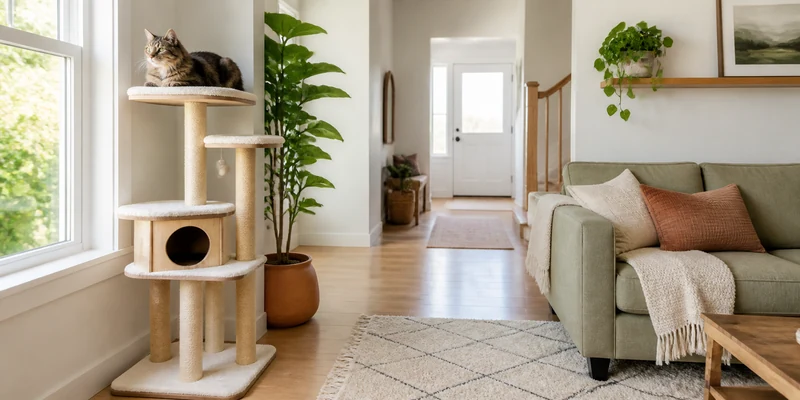
- In a room your household already uses, ideally beside a window. Cats want to watch what is going on, not to be filed away in a spare room.
- Well away from the litter box, and a few feet from the food and water bowls rather than directly above them.
- On level flooring, backed against a wall or into a corner, pushed and rocked by hand before your cat is anywhere near it.
Top Picks on Amazon
Prices and availability may change. Check the current listing on Amazon.


Where to Put a Cat Tree: Spot by Spot
Most homes offer three or four realistic candidates. Here is how the usual ones play out, so you can shortlist before dragging a heavy tower around.
| Spot | Why it tends to work | Watch out for |
|---|---|---|
| Living room, beside a window | Combines the two things cats rank highest: a view outdoors and a view of you. | Harsh direct sun all day; radiators or heating vents underneath. |
| Living room, back corner with a sightline | Good compromise for a shy cat: out of the walking path, room still in view. | A corner with no sightline is a hiding spot, not a lookout. |
| Bedroom near a window | Suits cats bonded to one person, and keeps the tree out of the living space. | Night activity and dawn scratching above your head. |
| Beside a sliding or patio door | Ground-level traffic makes it a strong second choice to a window. | Door swing, walkways, seasonal drafts and glare. |
| Hallway or landing | Workable in apartments where no room has spare floor, especially for a slim tower. | People brushing past a resting cat; doors swinging into the tree. |
| Spare room or basement | Tempting, because the floor is free. | The most common reason a tree goes unused. Cats follow the household. |
| Next to the litter box | Nothing to recommend it. | Litter dust on the platforms, beside a spot most cats would rather not nap. |
If you are still choosing the tower itself rather than its address, our hub guide to cat trees compares heights, formats, and footprints. The spot you have available often decides the size you should buy.
Window and Social Space Beat Spare Square Footage
Cats are ambush predators and prey animals at once, which is why height and visibility matter to them. A raised perch lets a cat monitor entrances, watch the household move around, and rest without being surprised from behind. That instinct explains why a tower in the middle of family life gets climbed daily while an identical one in a closed spare room gathers dust. A window adds the second layer, since movement outside gives a cat something to track for hours. Where a window is impossible, look for whatever else generates traffic, such as the kitchen doorway or the top of the stairs.
Cats also pick their own vantage points already, usually the back of the sofa, a windowsill, or the top of a bookshelf, and putting the tree near one borrows an established habit instead of asking for a new one. If the windowsill is the clear favorite but there is no floor space beside it, a cat window perch covers the same need in a fraction of the room.
When a Quiet Corner Is the Better Call
The social rule has real exceptions. A nervous or newly adopted cat, young children, a dog in the house, or a busy hallway can all make the center of the action the wrong place. A cat that cannot relax on a perch will not use it, however good the view is. The fix is usually not a different room but a different position in the same room: out of the walking path, backed against a wall so nothing can approach from behind, with the sightline over the space intact. Three adjustments that help anxious cats:
- Height first. A taller tree in a busy room often beats a short one in a quiet room, because elevation itself provides the distance.
- An escape route. Leave clear floor on at least two sides. Cats dislike perches they can only leave in one direction.
- Away from noise. Washing machines, printers, and speakers produce sudden sound that can put a cat off a spot for good.
In a multi-cat home the math changes again, since one tree in one location tends to become contested territory. Spreading two or three perching options across different rooms usually reduces friction more than buying a single large tower, as our guide to cat trees for multiple cats explains.
Distance from the Litter Box, Food, and Water
Cats naturally keep their eating, eliminating, and resting areas apart, and a tree crammed into the same corner as the litter box asks them to give that up. There is a practical side too: litter dust ends up on the carpeted platforms, and a cat jumping down lands in the tray zone. So put the box in a different part of the home, or at minimum on the other side of the room and clear of the landing area. If your floor plan offers only one usable corner, prioritize the tree and move the box.
Food and water are less rigid, and plenty of cats are content eating a few feet from where they rest. What to avoid is bowls sitting directly under a climbing route, where fur and loose fibers drop in and a landing cat sends water across the floor. One note worth keeping in mind: if a cat changes how it eats, drinks, or uses the litter box after you rearrange things, mention it to your veterinarian rather than assuming it is about furniture.
Stability: The Floor Matters as Much as the Tree
A tower that felt solid in the middle of the room can rock noticeably in its final spot, because stability depends on what sits underneath and behind it. Cats do not step onto perches politely: they launch, land hard, and push off sideways, and a base that shifts under that load is the beginning of a tip-over.
- Check the floor. Thick carpet and rugs compress unevenly and can leave a wide base resting on three points instead of four.
- Level the base. A thin shim under the low corner removes most wobble. Do this before your cat uses the tree.
- Back it against something. A wall or corner removes one or two directions the tree can travel in, which matters most for tall towers.
- Use the anchor if there is one. Many taller trees include a strap for fixing the top to the wall. Put the screw into a stud where you can.
- Clear the landing zone. Glass tables, floor lamps, and tall plants beside a tree are all things a cat can knock into on the way down.
- Push it yourself. Lean on the top perch and put real weight on the highest platform. Whatever moves under your hand will move more under a cat.
Renters have an extra constraint, since anchors mean holes. Small screw holes in drywall patch easily, but if that is off the table, a wider base and a corner position do much of the same work. Our guide to cat furniture for renters covers the no-drilling routes, and cat furniture safety goes deeper on tipping, weight limits, and materials.
A Simple Way to Pick the Spot
If two locations both look reasonable, work through this in order rather than guessing.
- Watch for two days. Note where your cat already naps and sits to look out.
- Shortlist two positions. One social and bright, one calmer with a sightline.
- Check the view. Crouch to roughly perch height. If you cannot see a window, a doorway, or the main part of the room, neither can your cat.
- Check the floor and wall. Level surface, a wall or corner behind, no vent underneath, no door swinging into it.
- Check the resources. Litter box elsewhere, bowls a few feet clear of the landing area.
- Place it and wait a week. If it goes unused after seven to ten days, move it to the second position rather than concluding your cat dislikes cat trees.
Cats that have never had a tower sometimes need the idea introduced rather than the location changed. Our article on whether cats need a cat tree covers what the furniture is actually for.
What to Do If Your Cat Ignores It After a Move
Relocating a tree that was previously popular can reset the habit entirely, and the reaction is usually about scent and routine rather than the new spot being wrong.
Move it in stages. Shift the tree a few feet every couple of days instead of all at once. It works far more often than a single relocation.
Bring the scent with it. Put the blanket your cat already sleeps on onto the top perch. Catnip or silvervine on the posts helps with many cats, though a fair proportion do not respond to catnip at all.
Give the spot a reason to exist. Feed treats on the top level for a few days and end wand toy sessions with the toy landing on a platform. Rewarding a cat while it is on the tree beats coaxing it there and stopping. Do not lift your cat onto it, which usually produces an immediate jump down.
Look at the approach. A tree that used to sit beside a sofa may have lost its launch point. Cats often reach a perch in two moves rather than one, so a chair or side table nearby can bring an ignored tower back into use.
The same patience applies to scratching surfaces, and the techniques overlap almost entirely with our guide on getting a cat to use a scratching post. One exception: if a cat that used to climb confidently stops, and the location has not changed, that is a physical question rather than a placement question, and your veterinarian is the right person to ask.
Common Placement Mistakes
- Choosing the room with spare floor. Empty floor is a reason the space is available, not a reason your cat wants to be there.
- Facing a blank wall. A perch with nothing to look at gets used for naps at best. Turn the top platform toward the room or the window.
- Parking it beside the litter box. Convenient for you, unappealing for the cat, and messy on carpeted platforms.
- Ignoring the wobble. A tree that shifts on a thick rug is a genuine safety issue with a heavy cat on the top level.
- Moving it again too soon. Give any new position at least a week before deciding it failed.
Where to Go From Here
Once the position is settled, read cat furniture safety for anchoring, weight limits, and the checks worth repeating twice a year. If the spot you picked is smaller than the tower you own, our hub guide to cat trees covers the slim and compact formats that fit awkward corners.
Frequently Asked Questions
Where is the best place to put a cat tree? In a room the household actually uses, next to a window if you have one, backed against a wall or into a corner. Living rooms suit most cats; spare rooms and basements are where trees go to be ignored.
Should a cat tree be near a window? Usually yes. Outdoor movement gives a cat hours of low-effort entertainment. Avoid harsh direct sun all day, and keep the tree clear of radiators and heating vents.
Can I put a cat tree next to the litter box? Better not to. Cats prefer resting, eating, and toileting areas separated, and litter dust ends up on the platforms and in the landing zone.
How far should a cat tree be from the food bowls? A few feet is plenty. What to avoid is bowls directly under a climbing route, where fur and debris fall in and a landing cat sends water across the floor.
My cat stopped using the tree after I moved it. What now? Walk it back partway and shift it again in small stages, put familiar bedding on the top perch, and feed treats up there for a few days. Check too whether the tree lost a launch point such as a nearby chair.
Does a cat tree need to be against a wall? Not strictly, but it helps. A wall or corner removes directions the tree can rock in, which matters most for tall towers and heavier cats. See cat furniture safety for anchoring options.
The Bottom Line
Put the tree where your household already is, ideally beside a window, backed against a wall or into a corner and well clear of the litter box. Level the base and push the tower hard by hand before your cat uses it, then leave the position alone for a week before judging it. If a move kills a habit, walk the tree back in stages and rebuild the routine with familiar bedding and treats on the top perch.