Last updated: August 8, 2026
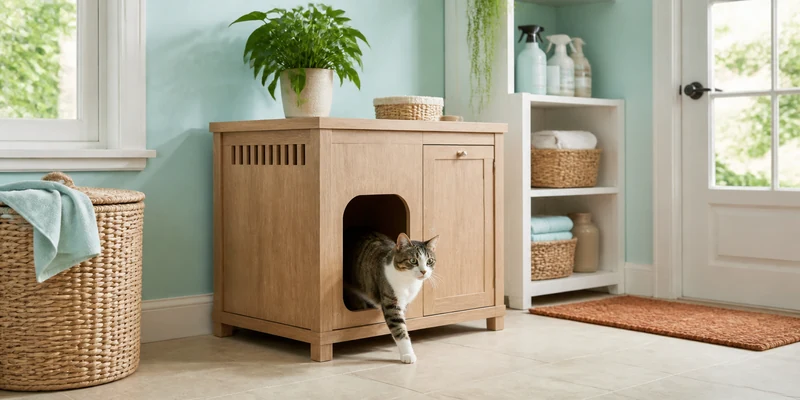
You are looking at a wooden cabinet that promises to turn the litter box into a side table, and somewhere in the product description sits a line about odor control. So does litter box furniture control odor? Mostly no. An enclosure hides the box and slows how fast smell spreads across the room, but it does not neutralize anything. The waste is still in there, and a tightly closed cabinet can hold that smell in a smaller volume of air instead of removing it.
That is not an argument against buying one. It is an argument for buying one for the right reason. Below: where the odor actually comes from, what an enclosure does and does not change, an honest look at the carbon filters these cabinets advertise, and the short routine that does the real work.
Quick Answer
Will a litter box cabinet stop your home from smelling?
- Litter box furniture hides the box, not the smell. It contains and delays odor rather than removing it.
- Odor is controlled by scooping frequency, enough litter, a big enough box, and airflow, in that order. A cabinet changes none of those on its own.
- An enclosure with poor ventilation can smell worse up close, both for you when you open the door and for the cat standing inside it.
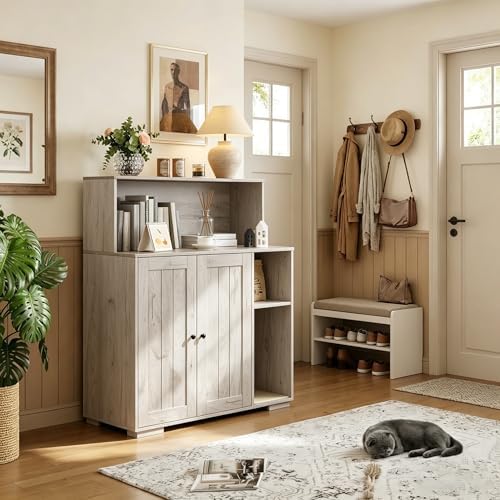
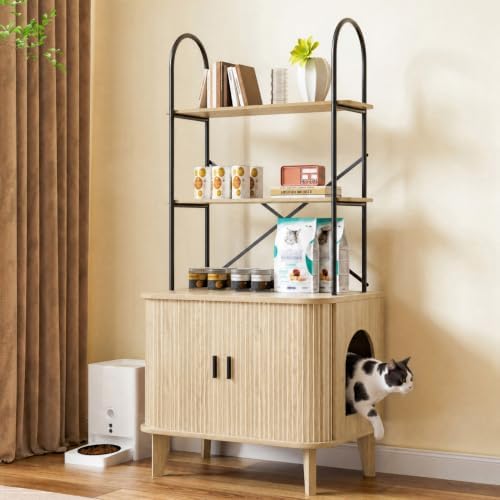
Top Picks on Amazon
Prices and availability may change. Check the current listing on Amazon.

What the Cabinet Changes, and What It Does Not
Odor complaints are not all the same problem. Find the row that matches what is actually bothering you.
| What bothers you | What an enclosure does about it | What actually solves it |
|---|---|---|
| The room smells when you walk in | Helps somewhat. A closed cabinet slows how fast odor reaches the rest of the room. | Daily scooping, plus litter deep enough for waste to get covered |
| Sharp ammonia smell near the box | Little to nothing, and a sealed cabinet concentrates it inside instead | Full litter change and washing the box on a schedule |
| Seeing the box and the litter | The real strength. It disappears into the furniture. | Nothing else does this as cleanly |
| Litter tracked across the floor | Helps, if there is a step-out area or mat inside | A high-sided box, larger granules, a trapping mat |
| A damp, musty smell inside the unit | Can make it worse. Enclosed spaces trap moisture along with odor. | Ventilation openings and wiping the interior down |
Read that as a division of labor. Furniture handles the visual problem and buys you a little time on the smell. Your routine handles the smell itself.
Where Litter Box Odor Actually Comes From
Two different smells get lumped together as “the litter box,” and they respond to different things.
Urine turns into ammonia over time. Fresh urine is fairly mild. Left sitting, bacteria break down the urea in it, and the result is that sharp, eye-watering note. This is a clock problem, and an enclosure does not slow the clock at all. Solid waste is the more immediate smell, and it is the one clumping litter and a decent covering layer handle well, provided your cat has enough depth to bury properly.
The box itself absorbs odor. Plastic scratched up by years of claws and scoops holds residue no matter how carefully you scoop. If a box smells right after a full litter change, the box is the source.
Neither is an airborne problem that a container solves. Both are about what sits inside the container and for how long, which is exactly why a cabinet underdelivers on odor: it addresses distribution, not production.
Do the Carbon Filters Actually Work?
Most cabinets that mention odor control point to a carbon filter, usually a thin pad clipped near a vent or in the lid. They do something, but far less than the marketing implies, and the reason is physics rather than a bad product.
Activated carbon works by adsorption: odor molecules stick to the large internal surface area of the carbon as air passes through it. That mechanism is real, and it is the same one used in range hoods and air purifiers. The catch is the phrase “as air passes through it.” A purifier uses a fan. A passive wooden cabinet lets most of its air leave through the cat-sized entry hole, because that is the path of least resistance, so only a small fraction ever touches the filter.
- Carbon saturates. Once loaded it stops working, with no visible signal. Manufacturers typically suggest replacing pads every month or two, and an unreplaced pad is functionally a piece of cardboard.
- It never removes the source. A filter reduces what escapes into the room. It does nothing about the air building up inside the cabinet, which is the air your cat is standing in.
- Powered units are a different category. A small fan or ionizer moves air across the filter deliberately, which is a genuine improvement, though it needs power and adds a part that can fail.
Owners who report good results with filtered cabinets almost always describe scooping daily as well. Reviews consistently mention the filter as a helpful margin rather than the thing doing the work.
When an Enclosure Makes Odor Worse
This is the part product pages skip. Boxing in a litter box changes the environment inside it.
- Trapped humidity. Urine adds moisture and a tight cabinet keeps it in. Damp litter clumps poorly and smells more, and a persistently damp interior develops its own stale note.
- Concentrated ammonia at cat height. You smell the room. Your cat is inside the box, at floor level, in the least ventilated part of the unit. Some cats refuse an enclosed box for exactly this reason, and a cat avoiding the box is a far bigger problem than a cat you can smell.
- A box that is now too small. Cabinets have fixed interior dimensions, and people often downsize the box to make it fit. Less litter surface means faster saturation, which raises odor rather than lowering it.
- Out of sight, out of mind. The most common one. When you cannot see the box, the scooping interval quietly stretches from daily to whenever the smell reminds you.
If your cat starts hesitating at the entrance or going beside the unit rather than in it, treat that as information and remove the door for a week to test the enclosure. If the avoidance continues, or anything changes in how often or how urgently your cat goes, that is a conversation for your veterinarian rather than a furniture decision.
What Actually Controls Odor
Here is the honest ranking, from most to least impact. None of it is exciting, and all of it outperforms any cabinet feature.
| What you do | How much it matters | How often |
|---|---|---|
| Scoop solids and clumps | The single biggest factor, by a wide margin | Once or twice a day |
| Keep the litter bed deep enough | High. Shallow litter means waste never gets fully covered. | Top up as you scoop, around three inches deep |
| Use a box large enough for your cat | High. More surface area means less saturation per square inch. | One-time choice, revisit as a kitten grows |
| Empty and wash the box | High once the plastic starts holding odor | Every few weeks, unscented soap |
| Give the enclosure real airflow | Moderate. Prevents the damp, concentrated interior. | Ongoing, plus an open door when you are out |
| Replace the carbon filter | Low, but not zero | Every month or two, if the unit has one |
| Scented litter or deodorizing sprinkles | Lowest. Masks rather than removes, and some cats dislike it. | Optional at most |
The rule of thumb widely repeated by shelters is one box per cat plus one spare. It helps with odor too, since waste spreads across more litter and no single box saturates. If you want the enclosure and the extra box, litter box furniture for two boxes covers how those units are laid out.
How to Set Up an Enclosure So It Smells Less
If you already have a cabinet, these adjustments make the odor situation as good as an enclosure realistically gets.
- Fit the largest box the interior allows. Measure internal width and depth before buying the box, not after.
- Create a second opening. Air only moves if it has somewhere to go. A back gap, a vent cut, or a door left ajar gives the cabinet a real airflow path.
- Do not seal the seams. The instinct is to make it airtight so nothing escapes. That is the setup most likely to concentrate ammonia and drive your cat away.
- Line the cabinet floor. A washable mat catches spills and keeps damp litter off the wood or laminate.
- Place it where you will notice it. A hallway or living room corner keeps the box in your daily path. A basement is where scooping schedules go to die, and a dead-end corner with one exit can feel unsafe to a cat who wants a sightline.
Common Mistakes
- Buying the cabinet as the solution rather than the container. If the routine does not change, the smell does not change; it just takes longer to reach you.
- Sealing it too well. Airtight is the opposite of what you want. Aim for contained but breathing.
- Leaning on scented products. Perfume plus ammonia is not an improvement, and strong fragrance is a common reason a cat starts using the rug instead.
- Forgetting the cabinet needs cleaning too. The box gets washed; the enclosure it sits in often never does.
So Is It Worth Buying One?
Yes, if you buy it for what it genuinely delivers. A good enclosure turns an unattractive plastic tray into a piece of furniture, contains tracked litter, gives your cat privacy, and stops the box from being the first thing anyone sees in a small apartment. Expecting it to fix a smell problem you have not addressed with scooping is what leads to disappointment.
If that trade sounds right, the next question is which format fits your space and your cat, which comes down to interior dimensions, ventilation, entry style, and how easily the top or door opens for scooping. Our main guide to what to look for in litter box furniture walks through those criteria. If your priority is that nobody can tell what the cabinet is, hidden litter box furniture covers the pieces that disguise it best, and renters working around a landlord’s rules will find the options in cat furniture for renters. If the cabinet has to hold its own next to the rest of your interior, it sits in the same design conversation as the rest of your modern cat furniture.
Frequently Asked Questions
Does litter box furniture control odor better than a covered litter box? Only marginally. Both are enclosures, and both contain smell rather than removing it. Furniture wins on appearance and on catching tracked litter, not on odor performance.
Do carbon filters in litter box cabinets work? They adsorb some odor molecules, but a passive cabinet moves very little air through the filter, and carbon saturates within a month or two. Treat it as a small bonus, not a deciding feature.
Will an enclosed box make my cat stop using it? Some cats dislike enclosed boxes, especially cramped or poorly ventilated ones. Watch for hesitation at the entrance or accidents beside the unit, and remove the door for a week to test it.
How often should I scoop if the box is inside furniture? Just as often as you would otherwise, once or twice a day. The enclosure does not extend the interval; it only hides the evidence that you skipped it.
Is a bigger cabinet better for odor? Generally yes, for two reasons: it fits a larger box, and a larger air volume dilutes what builds up inside. Interior dimensions matter more than the exterior footprint, so check both. See the two-box options if you have multiple cats.
The Bottom Line
Litter box furniture controls what you see far better than what you smell. It contains and delays odor, and a carbon filter shaves off a little more, but nothing about an enclosure removes the waste and ammonia producing the smell. Buy one because you want the box out of sight and the litter off your floor, then keep scooping daily, use a box large enough for your cat, and leave the cabinet enough airflow that your cat is willing to go inside it.