Last updated: August 8, 2026
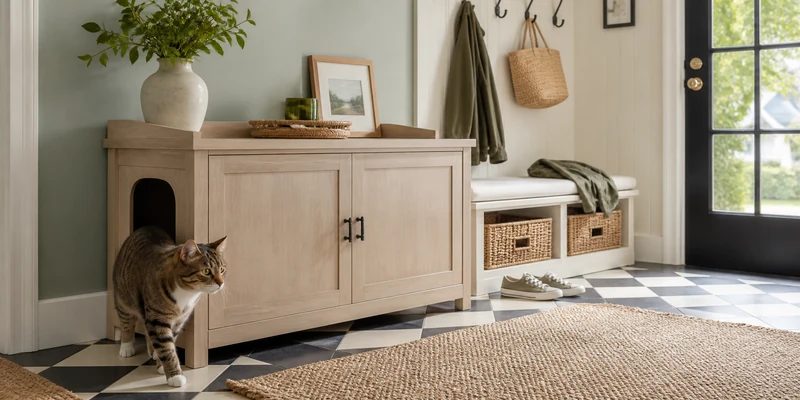
Almost everyone shopping for the best litter box furniture is solving the same problem: the box has to stay where it is, and it has to stop being the first thing a visitor sees. A cabinet, a bench, or a credenza with a cat-sized opening in the side does that, and in a small apartment it turns the least appealing corner of the living room into something that reads as furniture. The catch is that plenty of these pieces are designed around a photograph rather than around a litter box, and that gap is where the disappointment happens.
This guide is the starting point for the category. It covers the formats you can buy, the interior measurement that decides whether a cabinet works at all, how ventilation and scooping access differ between designs, and picks from budget cabinets up to a premium wood enclosure. It also covers the case where furniture is the wrong tool and a better open box will serve you more.
This article contains affiliate links. If you buy through them, we may earn a commission at no extra cost to you. Learn more.
Quick Answer
How do you pick litter box furniture that actually works?
- Measure your own litter box and your cat first, then shop by interior dimensions. External size and marketing words like “extra large” tell you nothing.
- Look for real airflow and a full-width opening for scooping: a hinged front door plus a lifting or removable top beats a single small hatch.
- Check the entry: the opening should be wide and low enough for your cat to step through without ducking or leaping, which matters most for kittens, large cats, and seniors.
Litter Box Furniture Types at a Glance
The category is sold as one thing, but the formats behave very differently once a cat and a box are inside. This overview covers what you will find and what each one is realistically good at.
| Format | What it is | Good at | Keep in mind |
|---|---|---|---|
| Cabinet or credenza | An enclosed wood or wood-look box with a side entry and one or two front doors | The default choice: it hides the box, holds a usable interior, and looks like furniture | Interior width varies enormously between models that look identical from the outside |
| Bench or side table | A lower unit with a flat top meant to be sat on or used as a surface | Doubling as seating in an entryway, or as an end table beside a sofa | Low height can leave too little headroom for a cat to stand and turn |
| Top-entry cabinet | Enclosure with the opening cut into the top surface or a lifting lid | Containing scatter and blocking dogs or toddlers from the box | Not suitable for kittens, seniors, or cats with stiff joints; the jump is the whole design |
| Cabinet with storage | A litter compartment plus a drawer or shelf section for scoop and litter | Keeping the supplies with the box instead of in a hall closet | The storage half eats the footprint, so the litter side is often the smaller one |
| Corner unit | Triangular or angled cabinet built to sit against an internal corner | Reclaiming dead space in a small room or bathroom | The usable rectangle inside a triangle is smaller than the outside suggests |
| Extra wide or double unit | A long console sized for two boxes side by side, or one jumbo box | Multi-cat homes and very large cats that need real floor area | Needs a genuinely long stretch of wall; measure the wall before the cabinet |
| Automatic box cabinet | A taller enclosure built around a self-cleaning unit | Hiding a bulky machine that most owners find unattractive | Needs height clearance, a power cord route, and a model-specific fit |
For most homes the plain cabinet is the right answer, and the interesting decision is size rather than style. If your priority is that nobody can tell what it is, our guide to hidden litter box furniture goes further into the designs that disappear best.
Measure First: Interior Dimensions Decide Everything
This is the step people skip, and it is behind most of the one-star reviews in this category. Listings lead with external dimensions because that is what fits a room. Your cat lives with the internal ones, and the difference between the two is panel thickness, the door frame, internal bracing, and on many models a raised lip along the bottom. Before you shop, get a tape measure and write down three numbers.
- Your litter box, at its widest point. Not the base: many boxes flare outward toward the rim, and hooded boxes are wider still. Measure length, width, and height including the rim, then add an inch or two on each side so you can lift the box out without wrestling it past a door frame.
- Your cat, nose to base of tail. A commonly cited guideline is that a litter box should be around one and a half times that length, which is why so many cats end up in boxes that are technically too small. If your current box is already tight, a cabinet built around it will lock that problem in place.
- The interior height. A cat needs to stand up, turn around, and dig without its back touching the ceiling of the cabinet. Cats that squat with their rear against a wall also need clearance behind them, which is where low benches tend to fail.
Compare those numbers against the interior dimensions in the listing, never the exterior ones. If a seller does not publish interior measurements, treat that as information in itself and ask before buying: words like “large”, “jumbo”, and “fits most boxes” mean nothing consistent across brands, and a cabinet sized for a standard box will not take a high-sided or covered one.
Large-breed owners have the hardest time here, since the cabinets that comfortably fit a Maine Coon and a jumbo box are a small fraction of what is sold. Look at extra wide consoles from the start rather than hoping a mid-size unit will do, and read our roundup on litter box furniture for 2 boxes, because those long units are often the only ones with the interior area a big cat needs.
Ventilation, Odor, and Scooping Access
An enclosure does two things to smell at once. It hides the odor from the room, and it slows the airflow that would otherwise dry the litter out. The first is why people buy these cabinets; the second is why some owners feel the box got worse after the upgrade. Furniture manages where the smell goes, it does not remove the cause, and inside a cabinet scooping frequency matters more rather than less. We go into this properly in does litter box furniture control odor.
What separates the better designs:
- More than one opening. Air needs somewhere to go. A single side entry in a sealed box is the worst case; a cutout at the back, vents in the panels, or a gap under the door all help.
- A top that lifts or lifts off. Scooping through a small front door, bent over at floor level, gets old within a week. Full top access is the feature that most improves daily use, and it lets you take the box out for a proper wash.
- Doors that open wide. Double doors that swing clear of the opening beat a single door that half blocks it, and magnetic catches outlast friction ones.
- A sealed, wipeable interior. Bare MDF or particleboard swells and delaminates once urine reaches it, and holds odor permanently after that. Look for a laminate or coated interior, and add a cut-to-size liner or washable mat on the floor.
- Feet or levelers. Getting the panels off the floor keeps moisture out of the base and makes it easier to sweep tracked litter from underneath.
If your household is sensitive to smell, put the cabinet where there is some natural air movement rather than in a closet or a windowless corner. Skip air fresheners inside the enclosure, since many cats avoid a box that smells strongly of anything, and a cat that stops using its box for any reason deserves a conversation with your veterinarian before you blame the furniture.
Our Top Picks at a Glance
How we chose: we compared widely available litter box enclosures on usable interior dimensions, ventilation and scooping access, material quality and how the interior copes with moisture, entry height, and whether the piece holds up as furniture in a room people use. Selections are based on manufacturer specifications and patterns that come up repeatedly in owner reviews. Finishes, sizes, and configurations change often, so check the current listing before ordering.
Two things worth saying before the list. Spending more does not automatically buy you a bigger interior, and it is entirely normal to buy the cabinet and then replace the box inside it with a larger open tray, since the tray is the cheap part.
🏆 Best Overall
A mid-range wooden cabinet with a side entry and a front door that opens most of the face for scooping. The format that gets the fundamentals right without paying for a designer name, and the sensible default for most living rooms.

💛 Best Value
An affordable flat-pack wooden enclosure in the mass-market segment, with double doors and a plain finish. A reasonable first purchase as long as you check the interior width and add a liner or mat to protect the base.

⭐ Upgrade Pick
A premium furniture-grade cabinet built specifically as a litter enclosure, with a side entry, a door sized for real scooping access, and adjustable levelers for uneven floors. Worth it when the piece sits in a room where it has to look chosen rather than tolerated.

Curious whether the premium option earns its place? Our The Refined Feline review goes through the brand’s litter cabinets and towers, including where owners run into limits with assembly and finish.
Matching the Cabinet to Your Home and Your Cat
Small apartments. In a studio the cabinet is visible from everywhere, so treat it as furniture with a second job. A bench in an entryway or a console under a window reads as intentional in a way a plastic hood beside the toilet never will. Check the depth against your walkway first, since these units are deeper than they look on screen. Renters have extra constraints, covered in cat furniture for renters.
Multiple cats. The standard guidance is one box per cat plus one, and enclosures do not change that arithmetic. Two boxes crammed into one cabinet is not the same as two boxes, because a cat guarding the single entrance controls both. Either buy a unit sized for two side by side with separate access, or put two cabinets in different rooms, which is usually the better outcome.
Kittens, seniors, and large cats. Entry height is the specification to check. A high step or a top-entry lid asks for a jump an arthritic older cat may quietly decline, and the result is a mess on the floor rather than a complaint. Low, wide openings suit every age. For a big cat, interior floor area matters more than the height of the cabinet.
Dogs in the house. A cat-sized opening is one of the more effective ways to keep a dog out of the litter, and it is a genuinely good reason to buy one. Put the entry on a side the dog cannot reach with a paw and keep the doors latched. If the room also has to look coordinated, our modern cat furniture guide covers the brands making litter cabinets alongside towers and shelves.
Picks for Two Boxes, Tight Corners, and Open-Box Holdouts
These cover the situations where a standard cabinet is the wrong starting point. Each one solves a specific problem.
🐾 Best for Two Boxes
An extra wide console with two compartments or a single long interior, sized so two standard boxes sit side by side with room to step around them. Measure the wall before you fall for one of these, because they are longer than most people picture.
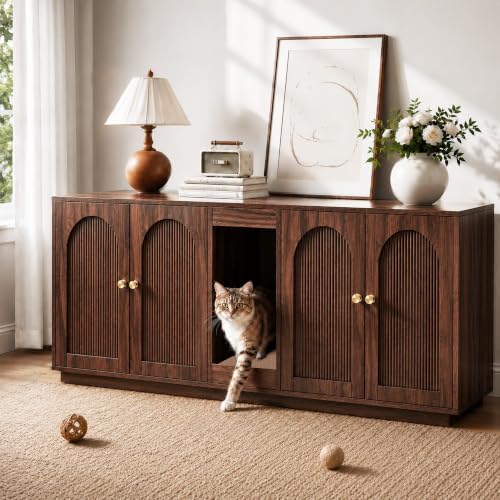
📐 Best for Tight Spaces
A corner or narrow-profile enclosure that uses dead space instead of a full run of wall. Check the usable interior rectangle carefully here, since compact outer dimensions flatter the space inside more than any other format.
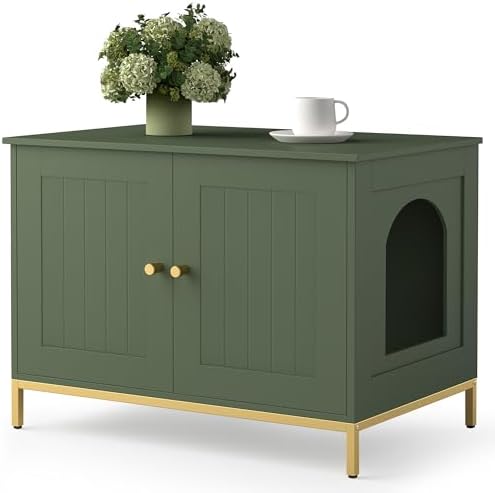
👍 Also Great
Not furniture at all: a high-sided open litter box with a low front step, for owners who decide airflow and easy scooping matter more than hiding the box. A tidy, well-shaped tray in a considered spot solves the scatter problem without the enclosure trade-offs.
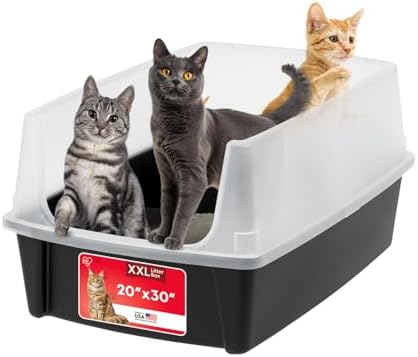
If hiding the box is the whole point of the purchase, compare designs in hidden litter box furniture before you commit. And if you are weighing a cabinet against a larger multi-purpose piece, some enclosed cat condos include a litter compartment, though they rarely do that job as well as a dedicated cabinet.
Assembly, Transition, and Upkeep
Assembly. Nearly everything here ships flat-packed with cam locks and dowels. Build it on carpet or cardboard to protect the finish, keep the panels square, and tighten fully only once the carcass is together. Wobble usually traces back to an uneven floor rather than the cabinet, which is why levelers or felt pads are worth having. Anything a cat may climb on top of should stay stable when you lean on it, and the principles in cat furniture safety apply here too.
Protect the interior before the first use. A cut-to-size plastic sheet, a washable mat, or adhesive vinyl on the base and lower panels costs very little and prevents the one failure that ends a cabinet’s life. Do it on day one, not after the first accident.
Transitioning your cat. Cats notice changes to the box more than almost anything else in the home. Put the cabinet where the old box was, with the same litter, and leave the doors and any lid open for the first few days so it reads as an open box in a frame. Then close things up gradually. Do not change location and enclosure at once, and if your cat starts avoiding the box, back up a step rather than waiting it out.
Upkeep. Scoop at least daily, and expect to do it a little more often than with an open box. Wipe the interior panels weekly, and take the box out for a full wash on your usual schedule, which is far easier with a lifting top. A mat outside the entry catches tracked litter, and check the base monthly for swelling that signals moisture getting in.
Common Mistakes When Buying Litter Box Furniture
- Shopping by external dimensions. The number that matters is the interior, often several inches smaller in each direction than the outside implies. Measure your own box too, rim and hood included.
- Buying a top-entry design for the wrong cat. Good for scatter and for keeping dogs out, poor for kittens, seniors, and heavy cats that would rather not jump.
- Expecting the cabinet to fix odor. It relocates the smell and slows airflow. Ventilation and scooping frequency do the actual work.
- Ignoring the interior material. Untreated MDF and urine are a one-way street. Seal it, line it, or choose a coated interior.
- Scooping access as an afterthought. If the only way in is a small door at ankle height, you will resent the piece by the end of the first month.
- One cabinet for a multi-cat home. Two boxes in one enclosure share one entrance, which is exactly the resource conflict you were trying to avoid.
Where to Go From Here
If concealment is the priority, hidden litter box furniture compares the designs that hide the box most convincingly. With more than one cat, start at litter box furniture for 2 boxes, which deals with interior area and separate access. Worried the enclosure will make the room smell worse, read does litter box furniture control odor first. For the premium end of the category, our The Refined Feline review covers the brand in detail, and designer cat furniture brands puts it next to the alternatives.
Frequently Asked Questions
Does litter box furniture actually work? For hiding the box, containing scatter, and keeping dogs out, yes, reliably. For odor it is a mixed result, since an enclosure slows airflow, so plan on scooping at least as often as before. See does litter box furniture control odor for the detail.
What size litter box furniture do I need? Measure your box at its widest point, add an inch or two of clearance on each side, and check that your cat can stand and turn inside without touching the ceiling. Then buy on published interior dimensions, never on the exterior size or a label like “extra large”.
Will my cat use an enclosed litter box? Most cats adapt within days if the litter and the location stay the same. Some prefer open sightlines and never settle, which is worth knowing before you buy: leave the doors open at first and watch what happens.
Can two litter boxes go in one cabinet? Only if the unit is genuinely sized for it and offers separate access, otherwise one cat can control both boxes from a single entrance. Our guide to litter box furniture for 2 boxes covers what to look for.
Is litter box furniture safe for kittens and older cats? Side-entry cabinets with a low, wide opening suit every age. Top-entry lids and high steps are the ones to avoid for kittens, seniors, and cats with joint stiffness, since a box a cat struggles to enter is a box it will stop using.
Can I put a self-cleaning litter box inside a cabinet? Some enclosures are built for it, with the extra height and a cord route that a standard cabinet lacks. Check the specific unit’s dimensions against the machine, and make sure the mechanism has clearance to move.
The Bottom Line
Good litter box furniture is chosen on three numbers: the size of your box, the size of your cat, and the interior dimensions the maker publishes. After that, look for airflow and a top or doors that make daily scooping easy, plus an interior that can survive a spill. Buy the cabinet for the room, buy the size for the cat, and accept that it hides the box rather than replacing the scoop.