
Last updated: August 8, 2026
An elevated cat bed solves a problem most people notice before they can name it. Your cat ignores the plush donut you bought and sleeps on the arm of the couch, on a stack of laundry, on the kitchen chair, on anything with a bit of height and a bit of air around it. Raised beds lean into that preference: a few inches of clearance under the sleeping surface changes the temperature, the sightlines, and how easy the whole thing is to keep clean.
The category covers more shapes than the name suggests: mesh cots on steel legs, wooden frames with a cushion, hammock-style slings, and low loungers that sit just far enough off the floor to let a vacuum pass underneath. They behave differently in a warm room than in a cold one, and they suit some cats far better than others. This guide covers what the height actually buys you, which format fits your room and your cat, and what to check before you order.
This article contains affiliate links. If you buy through them, we may earn a commission at no extra cost to you. Learn more.
Quick Answer
What should you look for in a raised cat bed?
- Match the surface to your room. Breathable mesh keeps air moving under a cat in a warm house; a padded or slung surface suits cooler rooms better, since a mesh cot sheds heat in both directions.
- Keep the entry low and the frame steady. Most cats step onto a bed rather than jump into it, so a few inches of lift with no rocking beats a tall frame that slides on hard floors.
- Buy for washing, not just for looks. A removable cover or a sling that comes off the frame is the difference between a bed you clean and a bed you replace.
Elevated Cat Bed Formats at a Glance
Raised means several different things once you start comparing listings. Work out which format your room calls for first, because the shape decides more about how the bed performs than the brand does.
| Format | Typical lift | Strengths | Worth checking |
|---|---|---|---|
| Mesh cot on a frame | 4 to 8 in | Maximum airflow, dries fast, easy to hose off, floor stays reachable | Cool by design, so it can feel bare in a cold room without a throw |
| Legged wooden frame | 4 to 10 in | Looks like furniture, stable, cushion usually removable and washable | Heavier and pricier; cushion quality varies a lot between models |
| Hammock frame | 6 to 14 in | Sling contours around the cat, feels enclosed without being covered | Some cats dislike the give underfoot; check the frame for rocking |
| Low lounger with feet | 2 to 4 in | Easiest entry for kittens and older cats, still lifts fabric off cold tile | Barely enough clearance to clean underneath on some designs |
| Window or wall mounted | Sill height and up | Combines a raised bed with a view; frees the floor entirely | Weight limits and mounting hardware matter more than comfort here |
That last row is really a different product with an overlapping job. If you want height for the view rather than the airflow, a mounted seat is the more direct answer: our guide to the cat window perch covers sill-mounted and bracket-mounted options, with suction cup window perches as the no-drilling route. For how raised beds sit alongside caves, donuts, and heated designs, start at the cat bed buying guide.
What the Height Actually Buys You
Three practical things, and it helps to be clear about which one you are buying for.
- Air under the cat. On a floor bed, body heat collects in the padding with nowhere to go. A mesh cot lets air move on all sides, which is why owners in warm climates report cats moving onto them in summer and off them again in winter.
- Distance from floor drafts. Cold air pools at floor level, especially on tile, laminate, and near exterior doors. A few inches of lift takes a cat out of that layer, which is the reverse of the airflow benefit and the reason raised beds get used year round in some houses.
- Access underneath. A bed you can vacuum under is a bed that does not sit in a ring of shed fur and litter tracking. It sounds minor until you own a long-haired cat.
The tension between the first two points is where most disappointment with this category comes from. A taut mesh cot is a cooling surface. Buy one for a drafty room in January and your cat will likely walk past it toward the radiator. The fix is a soft throw folded over the mesh, which keeps the height but cancels most of the airflow, or a different format entirely. For a genuinely cold room, a warming design is the more honest purchase, and our heated cat bed guide covers the mains-powered and self-warming options, including cot-style beds with a heated pad built in.
Entry Height, Stability, and Which Cats Struggle
Cats step onto beds far more often than they leap into them, and the step is where raised designs go wrong. Two things decide whether your cat uses the bed at all.
The lip. A cot frame with a rigid rail around the edge asks the cat to clear that rail on the way in and out. Healthy adults do not care. Kittens, heavy cats, and older cats who have become more careful about jumping often do, and a bed they hesitate at once is a bed they stop using. If your cat has started avoiding furniture she used to jump onto, that is a change worth mentioning to your veterinarian rather than something to solve with a purchase. On the product side, look for a low profile frame, a sling that dips in the middle, or a lounger with only a couple of inches of lift. Softer, lower-sided designs are the theme of our orthopedic cat bed roundup.
Movement. A lightweight frame on hard flooring slides when a cat launches off it, and a bed that shifts underfoot loses a cat’s trust quickly. Rubber feet, a wider footprint, or a thin non-slip mat underneath all fix it. Check the joints too: cot-style beds tension the fabric against the legs, and a corner that has worked loose shows up as a rocking motion long before anything breaks.
Our Top Picks for Raised Cat Beds
How we chose: we compared widely available elevated beds on frame stability, whether the sleeping surface comes off for washing, entry height, and how well the format matches a specific room temperature. Selections are based on manufacturer specifications and themes that come up repeatedly in owner reviews, not on hands-on assessment.
Two things worth knowing before you click. Cot-style beds are usually sold as pet beds rather than cat beds, so the small size is the right one for a cat and the medium is already dog territory. And nearly all of them ship flat and assemble in minutes, which does mean the first tightening pass matters.
🏆 Best Overall
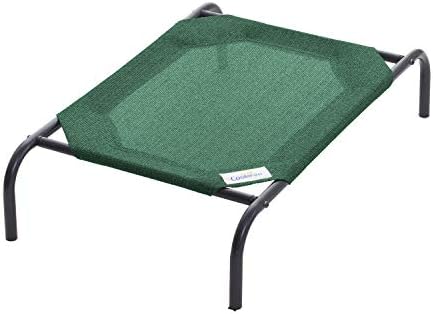
A classic mesh cot on a steel frame in the small size, with a taut breathable panel and a few inches of clearance. The default choice for a warm room, and the easiest version of this bed type to clean.
💛 Best Value
A plain steel-framed elevated cot with a mesh sleeping panel, no cover and no extras. Good value if you want to find out whether your cat likes sleeping off the floor before spending more.

⭐ Upgrade Pick
A wooden-legged bed with a removable, washable cushion, built to read as furniture in a living room rather than as pet gear. Suits a bed that has to sit in plain sight next to the sofa.

Warm Rooms, Cold Rooms, and Long-Haired Cats
Temperature is the strongest predictor of whether a raised bed gets used, so match the surface to the room rather than to the photo.
In a warm house, a sunroom, or a top-floor apartment that holds heat, mesh is the point. Air circulates under the cat instead of building up in stuffing, and the surface never compresses into a warm hollow the way a plush donut does. Long-haired cats tend to seek out these spots for the same reason, and mesh has a second advantage with heavy shedders: fur brushes off it rather than working into the fibers.
In a cold room the calculation reverses. Height still helps, because floor drafts are real, but the airflow that made the cot attractive in July works against it in January. A folded fleece throw is the simple fix. If the room is genuinely cold, look at a heated cot instead, since a cat given the choice will follow the warmth every time.
Multi-cat homes have a different problem: raised beds are single-occupancy furniture. Two cats who tolerate each other on the sofa will not usually share a cot, and the sling on a hammock frame tips them into the middle. Two smaller beds in different rooms work better than one large one, a pattern that holds across the whole cat bed category.
Two More Elevated Beds Worth a Look
If the picks above do not match your room, these two cover the awkward cases: a cold house where the height is still wanted, and a cat who prefers to be cradled rather than laid out flat.
🐾 Best for Cold Rooms
A cot-style elevated bed with a reversible warming pad on the sleeping surface. The sensible version of a raised bed for a drafty room or an unheated home office in winter.

👍 Also Great
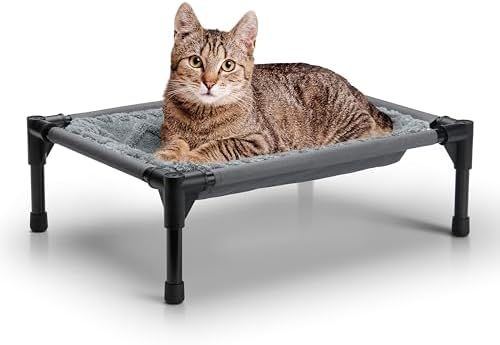
A hammock-style bed on a metal frame with a soft sling that curves around the cat and lifts off for washing. Worth trying for cats who settle into a hollow rather than sprawling flat.
If your cat’s real preference is height rather than airflow, a bed is the wrong piece of furniture: perches on a tower put her well above head height, which is a different kind of security, and the cat tree guide covers that route. If the bed has to hold up visually in a room you care about, modern cat beds and luxury cat beds cover the design-led end.
Placing It, Building It, and Keeping It Clean
Placement first, because it decides use. Cats choose sleeping spots for warmth, safety, and a view of the room, in roughly that order. A raised bed against a wall with a sightline to the doorway beats the same bed in the middle of a floor, and a spot where the afternoon sun lands is close to a guaranteed win in a cool house. Keep it out of walkways, since a bed people step around is a bed a cat will abandon.
Assembly on cot-style frames is quick but not always intuitive. The fabric panel is meant to be stretched taut before the last leg goes in, and the usual mistake is forcing that final corner rather than easing the frame apart. Build it on a flat surface, check that all four feet touch the floor, and give the joints a second pass after a week of use.
Maintenance is where raised beds earn their reputation. Mesh panels rinse clean and dry within an hour or two, which is practical for a cat who has occasional accidents or brings litter with her. Removable cushions and slings mostly go in the machine on a cold, gentle cycle and should be air dried, since heat is what turns a fitted cover into a slightly-too-small cover. Vacuum under the bed at the same time; the clearance is the whole reason you bought it.
Common Mistakes to Avoid
- Buying mesh for a cold room. The airflow that makes a cot attractive in summer makes it unappealing in a drafty room in winter. Add a throw or buy a warming format.
- Sizing up. Pet cots are usually sold in dog sizes. The small is almost always the right one for a cat, and an oversized surface feels less secure, not more generous.
- Ignoring the entry. A rigid rail around a cot is a real obstacle for kittens, heavy cats, and cats who have become cautious about jumping. Low profile designs get used more.
- Putting it on slippery flooring with nothing underneath. A frame that slides when a cat pushes off it teaches the cat not to trust the bed.
- Expecting two cats to share. Raised beds are single-occupancy. Two beds in two rooms will get more use than one big one in the hallway.
Where to Go From Here
If the room runs cold and your cat keeps drifting toward the radiator, height is not the missing ingredient and a warming design is: see heated cat beds. If your cat is older or has become careful about stepping up, prioritize a low entry and a supportive surface, covered in orthopedic cat beds. If it is the view she is after, a cat window perch gets her to the glass without using any floor space. For the full picture, the hub guide to cat beds is the place to start.
Frequently Asked Questions
Do cats actually like elevated beds? Many do, though preference is individual. A cat already sleeping on chairs, windowsills, and stacks of laundry is showing a preference for height and airflow, and those cats tend to take to a raised bed quickly.
How high should an elevated cat bed be? Most work well between about 3 and 8 inches off the floor: enough to clear drafts and allow cleaning underneath, low enough that stepping up stays easy.
Are mesh cots too cold in winter? They can be, since the airflow works in both directions. A folded fleece over the panel removes most of the chill, or switch to a heated cot for a genuinely cold room.
Can two cats use the same raised bed? Rarely by choice. Cot surfaces and hammock slings are shaped for one cat, and a shared bed usually becomes one cat’s bed.
How do you clean an elevated cat bed? Mesh panels wipe or rinse and air dry fast. Cushions and slings that lift off the frame generally go in the machine on a cold, gentle cycle and should be air dried to avoid shrinking.
Is an elevated bed better than a window perch? They solve different problems. A raised bed is about airflow, drafts, and cleaning; a perch is about the view and frees the floor entirely. Plenty of homes end up with both.
The Bottom Line
An elevated cat bed is worth buying when the room is warm, the floor is cold, or you are tired of vacuuming around a bed that never moves. Match the surface to your room temperature, keep the entry low and the frame steady, and insist on a sleeping surface that comes off for washing. If your cat is really chasing warmth or the view rather than airflow, a heated design or a window perch will get more use than a cot ever will.