Last updated: August 8, 2026
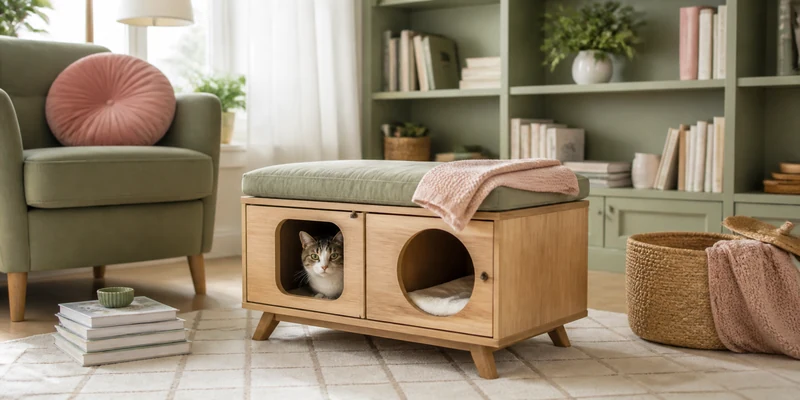
Choosing the best cat condo starts with knowing what you are actually buying. A condo is a furniture block: a boxy unit built around enclosed cubbies, with a lid or two you can sit a plant on and sides that read as a piece of furniture rather than a piece of pet gear. A cat tree is the other thing, an open climbing frame of posts and platforms designed to move a cat upward. Shoppers use the two words interchangeably, manufacturers cheerfully list the same product under both, and that is exactly why so many people end up with the wrong shape in their living room.
This guide sticks to the condo side of that line. It covers the enclosed formats worth knowing, the interior dimensions that decide whether a cat ever goes inside, what separates a solid cabinet from a laminate box that sags in a year, and picks for the situations most owners land in. If you are still weighing the two formats, our comparison of the cat condo versus the cat tree is the fastest way to settle it before you shop.
This article contains affiliate links. If you buy through them, we may earn a commission at no extra cost to you. Learn more.
Quick Answer
What separates a good cat condo from a box your cat ignores?
- The cubby has to fit the cat, not the catalog photo. Measure your cat curled up and stretched out, then check the interior width and the entry opening rather than the outside dimensions.
- Two ways in and out of the enclosed space. A single hole is a dead end, which matters most in homes with more than one cat.
- Build quality where it counts: a heavy base, panels that bolt together rather than clip, and a sisal wrapped post if you want the piece to absorb scratching too.
Cat Condo Types at a Glance
The word condo covers several quite different pieces of furniture. Narrowing to a type first saves far more time than comparing individual models, because the format decides where the thing can live and which cats will use it.
| Type | What it does well | Best suited to | Watch out for |
|---|---|---|---|
| Single cubby condo | One enclosed hideout with a flat top, small footprint, easy to slot beside a sofa | Single cats, small apartments, a second retreat in a bedroom | Interior often sized for a small cat; check the entry opening |
| Multi level condo tower | Stacks two or more cubbies with perches between them, so several cats can spread out | Multi cat households, cats that want height and cover | Gets tall enough to need anchoring; heavier to move once built |
| Furniture style cabinet | Reads as a sideboard or nightstand, with cat access built into the side | Living rooms and open plan spaces where nothing can look like pet gear | Design sometimes wins over usable interior space and airflow |
| Condo with litter box space | Hides a litter tray inside the lower compartment, lounging on top | Apartments, hallways, anyone tired of a visible tray | Ventilation and access for scooping; see our dedicated guide |
| Solid wood condo | Real panels and joinery that hold up under a heavy cat for years | Large breeds, households that want one piece to last | Substantial weight, and fewer soft surfaces than plush models |
| Design led condo | Walnut veneers, felt interiors and clean lines built for a visible room | Modern interiors, mid century leaning homes, studio apartments | Premium segment; confirm the interior is genuinely cat sized |
Most homes are well served by one main piece plus something smaller elsewhere. If the piece has to sit in a room you actually entertain in, the mid century modern cat condo roundup and the wider modern cat furniture hub cover the design led end in more depth.
Condo or Cat Tree? Where the Line Falls
Settle this before you compare models, because the two formats solve different problems and a cat that wants one is rarely satisfied by the other.
A condo is about cover. The value sits inside: a contained space with walls on most sides where a cat can sleep without watching the room. Cats that hide under beds, retreat when guests arrive, or claim cardboard boxes within seconds of delivery are telling you they want enclosure.
A tree is about elevation. The value sits on top: perches at different heights, posts to climb, a lookout above the traffic in the room. Cats that sit on the fridge or the bookcase are asking for altitude, and a two cubby block will not scratch that itch no matter how nice it looks.
Plenty of cats want both, which is why hybrid pieces exist and why the categories blur in product listings. The practical rule is to buy for the behavior you already see. If your cat sleeps in enclosed spots and climbs rarely, a condo is the better use of floor space; if your cat is constantly on top of things, start with the cat tree buying guide instead. Our full condo versus tree comparison works through the edge cases, and for a cat that does both, a multi level condo tower with perches on top is the closest thing to a compromise.
Interior Space: The Specification Nobody Lists Clearly
Product pages give you the overall footprint and the total height. What decides whether the condo gets used is the space inside the cubby, and that number is often buried or missing entirely.
Measure your cat, not the room. Two measurements are enough. Curled up, from nose to base of tail, gives you the minimum floor area of the cubby. Standing, from shoulder to floor, tells you whether the cubby is tall enough to turn around in. A cat that has to crouch or reverse out will use the top of the unit instead and leave the interior empty.
Entry openings are the usual failure. Manufacturers keep openings small because it looks cozy in photographs and uses less material. The hole needs to clear the shoulders comfortably with the cat moving at speed, not squeezing through deliberately. Larger breeds run into this constantly, which is why the Maine Coon cat condo guide exists as a separate roundup.
Two exits change the dynamic. In a single cat home one opening is workable. Add a second cat and a one hole cubby becomes a trap, so most cats stop going in. Two openings, or an opening plus a cutout at the back, keeps the space usable. The same logic runs through our guide to a cat tree for multiple cats.
Air and sightlines. A fully sealed box gets warm and stale, so a rear cutout or a slatted panel helps. Most cats also prefer to see out from where they rest, which makes an opening facing into the room a better bet than one facing the wall.
Materials and Build Quality
Panels. Most mass market condos are laminated particleboard, which is fine for a light cat and a low unit but sags across longer spans and swells if it gets wet. Plywood is a clear step up for stiffness, and solid wood is the durable end: heavier, and generally the right call for a big cat or a piece you expect to keep for years. The same trade off is covered in our solid wood cat tree roundup.
Surfaces and assembly. Carpeted condos are warmer and quieter under paw; hard surfaced units with a removable cushion are easier to wipe down and tend to look better in a visible room. Either way, insist on washable cushions. On construction, bolts through pre drilled panels with cam locks make a rigid box, while plastic clips and a thin stapled backer let the unit rack sideways when a cat launches off the top.
Scratching and stability. Many condos include sisal wrapped posts, and a condo that absorbs some scratching earns its footprint twice over; check that the sisal is rope or fabric rather than carpet and that it runs high enough for a real stretch, otherwise plan on a separate upright from our scratching post guide. Anything tall and top heavy deserves a wide base and an anchor strap, as our cat furniture safety guide explains.
Our Top Picks at a Glance
How we chose: we compared widely available cat condos on interior space, entry openings, build quality and value, using manufacturer specifications and the patterns that come up repeatedly in owner reviews. Model names, finishes and availability change often, so check the current listing before ordering.
Two things worth saying first. A taller condo is not automatically a better one, since the extra height usually adds perches rather than enclosed space. And a premium finish tells you nothing about whether your particular cat fits through the opening, which remains the specification to check on every listing regardless of segment.
🏆 Best Overall
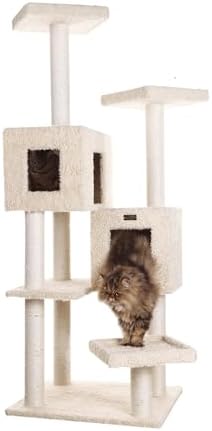
A multi level condo built around genuinely usable cubbies rather than decorative ones, with sisal wrapped posts and a base wide enough to stay planted. The sensible default when you want one piece that covers hiding, lounging and scratching.
💛 Best Value
A straightforward carpeted condo with an enclosed compartment and a perch on top, at an entry level price. A reasonable first piece, or a second retreat for a bedroom or home office.

⭐ Upgrade Pick
A design led condo made to sit in a visible room, with furniture grade panels, a considered silhouette and an interior meant to be lived in rather than photographed. Worth considering when the piece has to hold its own next to real furniture.

Want to compare within one lane instead of across them? The mid century modern condo roundup narrows the design end, and condos for Maine Coons covers the oversized bracket.
Matching the Condo to Your Cat and Your Room
Large and heavy cats. Maine Coons, Ragdolls, Norwegian Forest Cats and larger mixed breeds outgrow standard cubbies quickly. Look for oversized entry openings, wider platforms and solid panels rather than thin laminate, and treat any listed weight capacity as a figure that assumes correct assembly and a cat stepping on, not landing hard.
Households with several cats. Cats do not share one hiding spot politely. Two separate enclosed spaces, ideally on different levels, prevent the standoffs that happen when one cat controls the only cubby. Multiple exits matter here more than anywhere else.
Shy or newly adopted cats. An enclosed condo is genuinely useful during a settling in period, since it gives a cat somewhere to observe from without being exposed. Put it in a quiet corner with a sightline to the room rather than in the traffic.
Small apartments. A single cubby condo with a flat top does double duty as a side table, which is often the only way to justify the floor space. If you are renting and cannot mount anything to the walls, cat furniture for renters covers what works within a lease.
Kittens and senior cats. Kittens will use anything, though a low unit avoids awkward drops while they are still clumsy. Older cats often stop climbing before they stop hiding, so a ground level cubby they can walk straight into keeps a familiar spot available. If a cat that used to climb suddenly stops, or seems uncomfortable getting in and out, mention it to your veterinarian.
Picks for Bigger Cats, Busier Homes and Visible Rooms
These cover the cases where a standard single cubby condo is the wrong answer. Each one solves a specific problem rather than adding features.
🐾 Best for Multi-Cat Homes
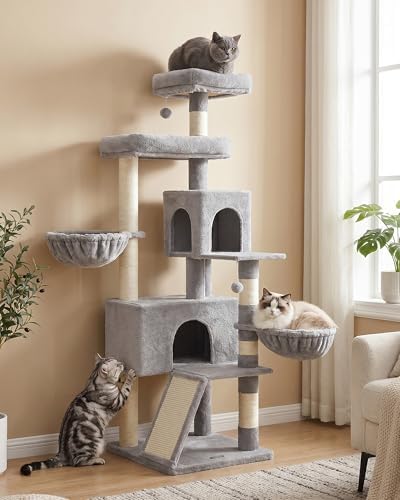
A taller condo tower with more than one enclosed space plus perches at different heights, so two or three cats can settle without negotiating. Look for a second opening on at least one cubby before you order.
📐 Best for Large Cats
An oversized wooden condo tower with a spacious cubby a big cat can turn around in, on a heavy, stable build that does not shift when a large animal launches off the top. Measure your cat curled up first, since this is the one specification you cannot fix later.

🛋️ Also Great
A modern box style condo with a hard shell and a removable cushion, sitting between mass market carpet and the premium design segment. A good middle option when the piece is visible but the budget is not unlimited.

Prefer a unit that hides a litter tray rather than a bed? That is a related but separate category, and our litter box furniture guide covers the cabinets built for it, including how they handle odor and scooping access.
Placement, Assembly and Upkeep
Placement. A condo works where the cat already rests, not where it fits the floor plan. Quiet corners with a view into the room, near a radiator or a sunny wall, tend to win. Avoid placing it in a doorway or a walkway, since a cat resting in an enclosed space wants to feel it will not be disturbed. The same reasoning is spelled out in our guide on where to place a cat tree, and it transfers directly.
Assembly. Build it on a flat floor, tighten in stages rather than fully seating each bolt as you go, then push the top corner firmly with one hand. If it racks, a panel is misaligned or a bolt is under tightened. Retighten after a week, then every few months.
Introducing it. Do not lift a cat into the cubby. Put a familiar blanket inside, play near the opening with a wand toy, and leave a treat just inside the entry. Most cats investigate within days. If it is still ignored after a couple of weeks, the usual culprits are placement, a cubby that is too tight, or the smell of new materials.
Upkeep. Vacuum the interior regularly, since enclosed spaces collect fur faster than open platforms. Wash cushions, wipe hard surfaces, and check cutout edges for splintering on wooden units. Frayed sisal can be trimmed rather than pulled.
Common Mistakes When Buying a Cat Condo
- Buying by outside dimensions. A large condo can have a small cubby. The interior width and the entry opening are what decide whether your cat goes in.
- Choosing a condo when the cat wanted a tree. If your cat lives on top of the bookcase, enclosed cubbies will not get used. The format comparison sorts this out in a couple of minutes.
- Ignoring the second exit. One opening is fine for a single cat and a real problem once there are two, because the cubby becomes a place to be cornered.
- Assuming carpet counts as a scratching surface. It mats down, stops catching claws and blurs the line between furniture that may be scratched and furniture that may not.
- Skipping the anchor strap on a tall unit. A condo tower is a piece of top heavy furniture. It deserves the same wall fixing as a bookshelf.
- Putting it out of the way. A condo banished to a spare room is the most common reason a perfectly good piece sits empty.
Where to Go Next
If size is your sticking point, cat condos for Maine Coons covers the oversized end, and large cat trees is the equivalent for the open climbing format. If the look matters most, start with mid century modern cat condos and the broader modern cat furniture hub. And if what you really need is somewhere soft rather than somewhere hidden, our cat bed guide covers covered and cave style beds that give cover without the footprint of a cabinet.
Frequently Asked Questions
What is the difference between a cat condo and a cat tree? A condo is a boxy furniture piece built around enclosed cubbies, while a tree is an open climbing frame of posts and platforms. Buy the condo if your cat hides, the tree if your cat climbs, and see our full comparison if it is not clear cut.
How big should a cat condo cubby be? Big enough for your cat to lie down curled and turn around without crouching. Measure your cat nose to tail base while resting, then compare that against the listed interior dimensions rather than the overall footprint.
Do cats actually use enclosed condos? Many do, particularly cats that already claim boxes, closets or the space under a bed. Cats that prefer high open lookouts often use only the top surface, which is worth knowing before you pay for the cubbies.
Is one condo enough for two cats? Usually not. Two separate enclosed spaces at different heights prevent one cat controlling the only hideout, and cubbies with two openings help a great deal, as our multi cat guide explains.
Can a cat condo hold a litter box? Some are built for it, with a lower compartment sized for a tray and an access cutout. That is a distinct product category with its own ventilation and cleaning considerations, covered in our litter box furniture guide.
Do cat condos need to be anchored to the wall? Any tall or top heavy unit should be, especially in homes with children or enthusiastic jumpers. Low single cubby condos on a wide base are generally stable on their own.
The Bottom Line
A cat condo earns its floor space when the enclosed part actually works: a cubby your cat fits in comfortably, an opening wide enough to move through at speed, and ideally a second way out. Match the format to the behavior you already see, hiding rather than climbing, and pick the build quality your cat’s size demands. Everything else, finish included, is secondary.