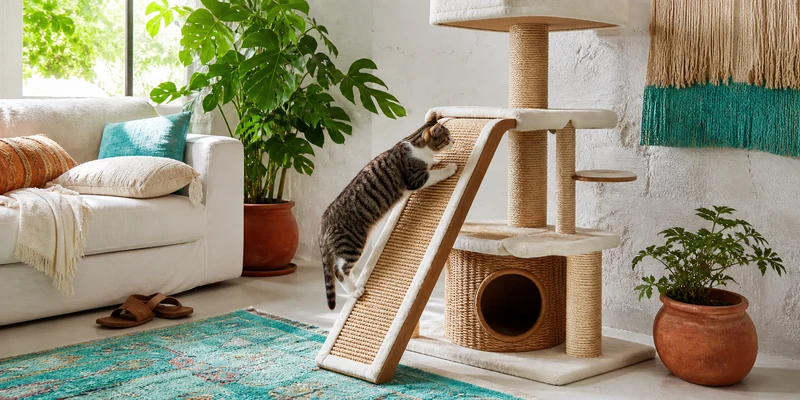
Last updated: August 8, 2026
Almost every tower on the market claims sisal somewhere in its listing, which makes shopping for a sisal cat tree oddly difficult. One model has thick natural rope wrapped from the floor to the second platform. Another has a single short sleeve of woven sisal fabric with carpet everywhere else. A third has something soft and hairy that is really jute, sold under a sisal-sounding description. All three photograph the same way, and only one of them will still be worth scratching a year from now.
The distinction matters more than most product pages let on, because the scratching surface is the part of a cat tree that gets used hardest and wears out first. This guide covers the differences between natural sisal rope, woven sisal fabric, jute, and carpet, then the two specifications that decide whether your cat actually uses the posts: how far the sisal reaches and how tall the post is. If you are still weighing formats rather than materials, our hub guide to cat trees compares towers, condos, and wall systems first.
This article contains affiliate links. If you buy through them, we may earn a commission at no extra cost to you. Learn more.
Quick Answer
What makes a sisal cat tree worth buying?
- Natural sisal rope, tightly wrapped, is the surface that holds up to claws. Sisal fabric is a decent second choice; jute and carpet wear out far faster.
- At least one post should let your cat stretch out fully, front paws overhead, without running out of sisal partway up.
- Coverage beats count. One tall, fully wrapped post gets used more than four short stubs of rope between platforms.
Sisal Rope, Sisal Fabric, Jute, and Carpet Compared
Four surfaces turn up on cat trees, and listings use the words loosely. Here is what each one actually is and where it belongs on a tower.
| Surface | What it is | How it wears | Best used for |
|---|---|---|---|
| Natural sisal rope | Twisted fiber from the agave sisalana plant, wound in tight coils around a post | Frays strand by strand and keeps its bite for a long time; looks scruffy before it stops working | Vertical scratching posts, the main climbing column |
| Sisal fabric | The same fiber woven flat into a stiff cloth, stapled or glued over a panel or post | Wears evenly and sheds much less mess; a torn seam is harder to repair than a loose coil | Flat panels, ramps, tidy modern towers, low-shedding homes |
| Jute | A softer, hairier plant fiber that looks similar to sisal in photos and costs less | Fuzzes up and unravels quickly under regular clawing | Decorative trim; not a surface to rely on for a serious scratcher |
| Carpet and plush | Looped or cut pile fabric wrapped over platforms and sometimes over posts too | Mats down, pulls into loops, and loses its texture within months of hard use | Platforms, hammocks, and beds, where cats rest rather than scratch |
The practical takeaway is that carpet is not a failure as a material, it is just in the wrong place when it appears on a post. A tower with plush platforms and genuine sisal columns is a better buy than one wrapped in carpet from top to bottom, whatever the platform count says.
Why Cats Take to Sisal in the First Place
Scratching is not your cat being destructive. It sheds the outer sheath of the claw, stretches the shoulders and spine, and leaves both a visual mark and scent from glands in the paws, which is why cats scratch in doorways and beside sleeping spots rather than in a quiet corner. Our explainer on why cats scratch goes into the behavior in more detail.
All of that needs resistance. A surface that gives way under the claw does nothing for the nail and leaves no mark worth returning to. Sisal rope pushes back: the fibers are coarse and packed tight, the coils run across the direction the claw drags, and a claw sinks in and then releases with the fiber shredding rather than the whole surface tearing. Owners report the same pattern again and again, which is that a cat will pass a carpeted post to reach a sisal one in the same room.
Sisal fabric behaves slightly differently. The weave is flatter and finer, so the pull is smoother and the shredding much less dramatic, which some cats prefer and some ignore. It is genuinely tidier, and it holds up well on a flat panel where a cat scratches at an angle. On a vertical post that takes a full-body stretch, tightly wound rope is still the more forgiving surface, mostly because a frayed section of rope is easy to trim or rewrap while a torn panel is not.
One more note on rope quality, since it rarely appears in a listing. Sisal rope is sold in treated and untreated forms, and the treated kind is coated in oil during manufacture to make it flexible. Untreated rope is the one you want on cat furniture: it holds its shape, it does not smell, and it leaves nothing on paws. If you ever rewrap a post yourself, buy rope described as unoiled or specifically sold for cat furniture.
Height and Coverage: The Two Specs That Decide Everything
A cat tree can be built entirely from good sisal and still get ignored, and the reason is almost always geometry.
Height first. A cat scratching properly reaches up, hooks in, and pulls down through the whole length of the body. That means the usable post has to be taller than your cat is long. Measure yours from the floor to the tip of the front paws while stretched up against a door frame, and treat that as the minimum for at least one post on the tower. Plenty of multi level towers stack platforms so closely that no single section allows a full stretch, which turns a tall, impressive looking tree into a set of short steps. If your cat is a big breed, our roundup of cat trees for large cats covers this problem specifically.
Coverage second. Manufacturers save money by wrapping only the middle of a post and leaving carpet at the top and bottom, or by covering the bottom two posts and leaving the upper ones bare. Look closely at the product photos and count how many posts are wrapped end to end. A cat that hooks in high and drags down onto a carpeted section gets an inconsistent surface, and inconsistency is enough to send it back to the sofa arm.
Two smaller specs are worth checking as well. Post thickness changes the grip: a thin post flexes when a heavy cat pulls on it, and flex reads as instability. And the base has to resist sideways force, not just downward weight, because scratching pushes a tower over far more effectively than climbing does. Our guide to cat furniture safety covers tip-over risk and anchoring in full.
Our Top Picks at a Glance
How we chose: we compared widely available towers on the type of sisal used, how far it runs up each post, the height of the tallest uninterrupted scratching section, post thickness, and base stability, using manufacturer specifications and the issues that come up repeatedly in owner reviews rather than any hands-on assessment of our own.
Two things worth knowing before you order. Model numbers and colorways in this category change constantly, so check the current listing photos against the coverage points above rather than trusting a familiar product name. And every sisal tower sheds fiber for the first few weeks, which is normal and slows down considerably after that.
🏆 Best Overall
A tall multi level tower with natural sisal rope on its main posts, plush platforms, and a wide base. The sensible default when you want one piece that covers scratching, climbing, and napping without compromising on the surface that matters.

💛 Best Value
A mid height tower with sisal wrapped posts at an entry level price. Check the listing photos for rope that runs the whole post rather than a short wrapped section, since that is where budget models usually cut corners.

⭐ Upgrade Pick
A design-led tower that pairs wood-look panels with natural sisal columns and a replaceable scratching surface, for living rooms where carpeted furniture would look out of place. Modern styling without giving up a proper scratching surface.

If the design angle is what brought you here, our roundup of modern cat trees compares the styling-first options across the category.
Heavy Scratchers, Tight Rooms, and Posts That Need Reviving
Three situations change what you should buy, and each has a straightforward answer.
Cats that scratch hard need thickness as much as height. A heavy-bodied cat pulling down on a slim post makes the whole tower flex and sway, and a swaying tower stops feeling safe long before it actually tips. Look for chunky posts, rope wound tightly enough that no gaps show between coils, and a base broad enough to stay put under sideways load.
Small rooms are the harder case, because compact towers are exactly where post height gets sacrificed first. A short tree with one genuinely full-length sisal post beats a taller one with the same total height split across four stubby sections; our guide to small cat trees works through the footprint trade-offs.
An old favorite tower is often worth saving rather than replacing. When the rope on a post has gone stringy and your cat has moved on to the rug, rewrapping that post with fresh sisal restores the surface for a fraction of the cost of a new tree and takes an evening. It is the same skill used in our guide to building a DIY cat tree, on a much smaller scale.
🐾 Best for Heavy Scratchers
A heavy duty tower built around thick, fully wrapped sisal posts and a substantial base, aimed at large or enthusiastic cats that make lighter towers rock.
🏠 Best for Small Spaces
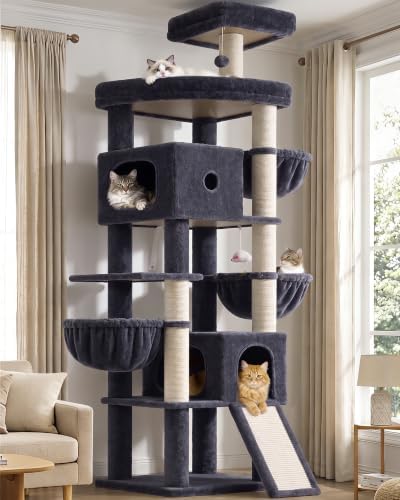
A compact tower with a small footprint that still carries one post long enough for a full stretch, so a studio apartment does not cost your cat its scratching surface.

👍 Also Great
A roll of untreated natural sisal rope for rewrapping a worn post. The cheapest way to bring an otherwise solid tower back into service, and useful to keep on hand once you own one.

Placement, Assembly, and Keeping Sisal in Good Shape
Put the tree where the household already is. A sisal tower in a spare bedroom gets used far less than the same tower beside the sofa or near the window your cat already watches, because scratching is partly territorial signaling and cats mark where traffic is. If the goal is redirecting claws away from a specific piece of furniture, place the tree next to that piece first and move it gradually once the habit sticks. Our guide to where to place a cat tree covers the room logic, and stopping a cat from scratching furniture handles the redirection side.
During assembly, tighten every bolt fully and then go around again after the tree has stood for a day, since posts settle and a loose column wobbles under scratching pressure. Check that the rope ends are secured properly at the top and bottom of each post; a loose end invites a cat to unravel the whole wrap. If the tower is tall or your cat lands hard, anchoring it to the wall with a furniture strap removes the tip-over question entirely.
Upkeep is mostly restraint. Trim frayed strands flush with scissors instead of pulling them, because pulling unwinds the coil beneath. Vacuum loose fiber off platforms with an upholstery attachment. Resist replacing a post the moment it looks messy, since a well used sisal surface looks worse than it performs and cats generally prefer a broken-in post. When the rope has genuinely gone soft and lost its bite, rewrap it rather than buying a new tower. If your cat still ignores the posts after all this, the introduction technique in our guide to getting a cat to use a scratching post usually solves it.
Common Mistakes to Avoid
- Buying on platform count instead of post length. Six levels stacked close together can leave no section tall enough for a full stretch, which is the single most common reason a tower gets ignored.
- Assuming a sisal listing means sisal posts. Some towers carry sisal on one small panel and carpet everywhere else. Count the wrapped posts in the photos.
- Accepting jute as a substitute. It looks close in a product image and fuzzes out within weeks of real use.
- Ignoring the base. Scratching pushes sideways, and a narrow base under a tall post is what makes a tower rock.
- Throwing out a tower over a worn post. Rewrapping with untreated rope restores the surface and keeps a structurally fine tree in service.
- Putting it out of the way. A tree in a back room competes with a sofa arm in the middle of household traffic, and it loses.
Where to Go From Here
If a full tower is more furniture than your room can absorb, a dedicated post covers the scratching need on its own; start with our hub guide to the cat scratching post category, then read the companion piece on the sisal cat scratching post, which applies everything above to standalone posts. For construction rather than surface, solid wood cat trees looks at frames and joinery, and tall cat trees covers height and stability together. The hub guide to cat trees remains the place to start if you are still choosing a format.
Frequently Asked Questions
Is sisal better than carpet on a cat tree? On the posts, yes, in the sense that it lasts longer and keeps a texture cats keep returning to, while carpet mats down and loses its bite. Carpet is perfectly fine on platforms and beds, where cats rest rather than scratch.
What is the difference between sisal rope and sisal fabric? Both come from the same plant fiber. Rope is twisted and wound around a post, giving a coarse surface with strong resistance that frays visibly. Fabric is woven flat and stapled over a panel, which sheds far less mess but offers a smoother pull. Rope suits vertical posts, fabric suits flat panels.
How tall does the sisal post need to be? Tall enough for your cat to reach up with front paws overhead and pull down through the full stretch. Measure your cat against a door frame and use that as the minimum for at least one uninterrupted post on the tree.
Can I rewrap a worn sisal post myself? Yes, and it is a common repair. Remove the old rope, wind untreated sisal rope tightly from the bottom up with no gaps between coils, and secure both ends. It is the cheapest way to keep a solid tower in service.
Is sisal safe if my cat chews the fibers? Loose strands are usually spat out rather than swallowed, but the same is not true of every cat. Trim frayed pieces flush, keep long loose lengths off the tree, and speak to your veterinarian if your cat regularly eats fiber or fabric.
The Bottom Line
A sisal cat tree is only as good as its posts, so judge the tower by what covers them and how far the covering runs. Natural sisal rope, tightly wound end to end, on at least one post tall enough for a full body stretch, over a base wide enough to resist sideways pull. Get that combination right and the plush platforms, hammocks, and level count become the pleasant extras they should be rather than the reason a tree goes unused.