Last updated: August 8, 2026
Two tabs open, two products that look almost identical, two different words on the label. The cat condo vs cat tree question is confusing for a good reason: manufacturers use the terms loosely, listings mix them freely, and plenty of pieces genuinely sit somewhere in between. Underneath the marketing, though, there is a real distinction, and it is the one worth shopping on.
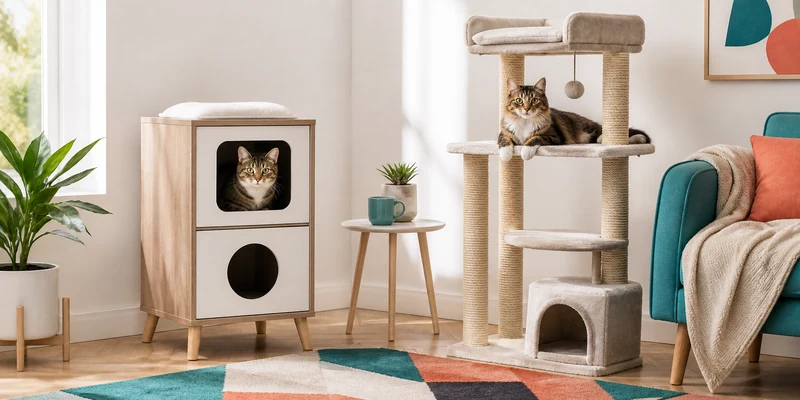
A condo is a furniture block built around enclosed cubbies. Its value is cover. A tree is an open climbing frame of posts and platforms. Its value is elevation. Neither one is the upgrade of the other, and the cat in your living room has already told you which she prefers. This article lays the two formats side by side, then walks through how to read that behavior so you buy the shape your cat will actually use.
Quick Answer
Condo or tree? Buy for the behavior you already see.
- A condo is a boxy furniture unit with enclosed cubbies. It sells cover: a contained spot where a cat can sleep without watching the room.
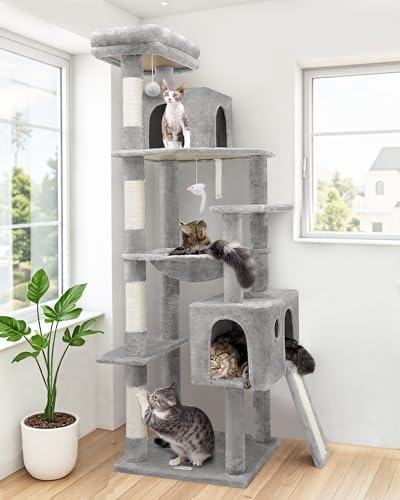
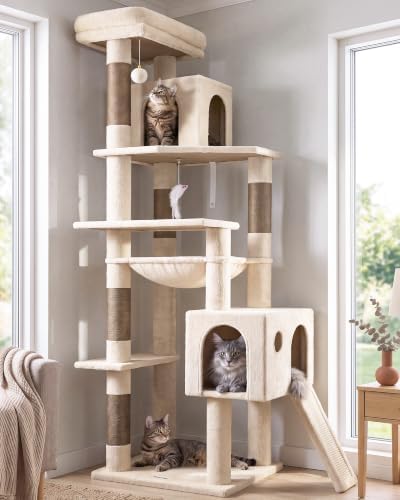
- A tree is an open tower of posts and platforms. It sells elevation: height, climbing routes, and a lookout above the household traffic.
- Cats who hide under beds and claim cardboard boxes want the condo. Cats who sit on the fridge and the bookcase want the tree. Do both, and a multi level condo with perches on top is the honest compromise.
Top Picks on Amazon
Prices and availability may change. Check the current listing on Amazon.

Cat Condo vs Cat Tree: The Comparison
This is the whole comparison in one place. Scan the rows that describe your household rather than trying to score every line, because a format usually wins on two or three points that matter to you and ties on the rest.
| What you are comparing | Cat condo | Cat tree |
|---|---|---|
| Core idea | Cover. An enclosed space with walls on most sides | Elevation. Open perches at increasing heights |
| Shape | A furniture block or cabinet, boxy, often with a flat usable top | A frame of vertical posts joined by platforms and sometimes a hammock |
| Typical height | Low to mid, roughly nightstand to bookshelf range | Mid to tall, often reaching toward the ceiling |
| Footprint | Solid and rectangular, but sits flush against a wall like real furniture | Can be narrow at the base, though tall models need a wide base to stay stable |
| What the cat gets | A private retreat, a warm den, a place to sleep unobserved | A vantage point, a climbing outlet, and separation from floor level activity |
| Scratching | Varies. Some include a sisal post, many offer only carpeted panels | Usually central. Full height sisal posts are the format’s main selling point |
| Multi cat homes | Works when cubbies have two openings, so nobody gets cornered | Strong. Vertical layers let cats share a room without sharing a level |
| Kittens and climbers | Limited climbing value, though the top makes a decent first jump | The natural fit for climbing energy, provided the build is stable |
| Senior or heavy cats | Easy access at floor level, no jumping required | Needs low entry steps or ramps to stay usable as a cat slows down |
| Living room looks | Generally easier to blend in. Wood and cabinet styling read as furniture | Harder to disguise, although the design led end has improved a lot |
| Doubles as | Storage, a side table, or a litter box enclosure in some models | A scratching post plus a window lookout, if you place it well |
| Clearest buying signal | Your cat sleeps in boxes, closets, laundry baskets and under beds | Your cat sleeps on shelves, cabinets, the fridge and the top of the stairs |
If the last row already settled it for you, the rest of this article is optional reading. If your cat does a bit of both, keep going, because the mixed case has a clean answer too.
What a Condo Is Really Selling: Cover
Enclosure is not a decorating choice for a cat. A space with solid walls and one or two controlled entrances lets an animal switch off its guard, which is the same instinct behind the cardboard box that gets claimed within seconds of a delivery. In a busy household, a condo is the piece of furniture that offers that on purpose instead of by accident.
What makes or breaks a condo is the space inside the cubby, not the outside dimensions on the listing. Two measurements decide it: your cat curled up from nose to base of tail, which sets the floor area, and shoulder height standing, which tells you whether she can turn around in there. A cubby that forces a cat to crouch or reverse out gets ignored, and the top of the unit becomes the only part in use.
Entry openings are the second common failure. Small holes photograph as cozy and use less material, but they need to clear the shoulders of a cat moving at speed, and larger breeds run into that wall constantly. In a multi cat home, a single opening turns a cubby into a dead end, so look for two ways out. Sizing for big cats is handled in the Maine Coon cat condo roundup.
What a Tree Is Really Selling: Elevation
Height does several jobs at once. It widens a cat’s field of view, provides an exit route from anything unwelcome at floor level, and lets her stay in a busy room without being in the middle of it. Owners tend to underestimate that last function, which is why a tall perch by a window often gets more use than any bed in the house.
A tree also carries the scratching load in a way most condos do not. A full height sisal post lets a cat stretch out and pull downward, which is the specific motion the arm of your couch has been standing in for. Carpeted posts muddy that message, since they teach a cat that carpet is fair game, and the rug on the floor is carpet too. If the tree you like skips a proper upright, plan on a separate one from the scratching post guide.
The trade off is presence. Trees are tall, visually busy, and rarely sit flush against a wall. They also raise a safety question a condo mostly avoids: anything top heavy needs a wide base and, above a certain height, an anchor strap into the wall. That side of the decision is covered in cat furniture safety, and placement matters as much as the model, which is the subject of where to place a cat tree.
How to Read Your Own Cat
Spend a week watching before spending anything. Cats broadcast their preference clearly; the signals are just easy to walk past.
- Where does she sleep in the afternoon? Under the bed, in a closet, inside a box or a laundry basket points to cover. On the back of a chair, a shelf, or a windowsill points to elevation.
- What happens when the doorbell rings? A cat who vanishes is asking for a retreat. A cat who moves upward and watches from a height is asking for a perch.
- Does she climb unprompted? Counters, bookcases, the top of the fridge. Habitual climbers use towers. Committed floor dwellers often do not.
- Is there tension between cats? Blocked doorways and staring contests usually ease with vertical space rather than more floor level beds.
- Where is the scratching happening? Door frames and couch arms mean a tall upright is doing more work than either format’s other features.
Once the signal is clear, the follow up question is what separates a good example of that format from a mediocre one. For the enclosed route, our guide to what to look for in a cat condo covers interior sizing, panel quality and the formats worth knowing. For the vertical route, the cat tree buying guide works through post height, platform size and stability, which matter far more than the number of levels a listing advertises.
When Your Cat Wants Both
Plenty of cats hide during the day and climb in the evening, and that is not indecision on their part. Cover and elevation answer different needs at different moments, and both can be genuine.
The hybrid piece. A multi level condo tower stacks cubbies with perches above them, the closest single object to a compromise. Expect a very good condo and a merely acceptable tree, since the climbing routes are short by design.
Two smaller pieces in different rooms. Often the better answer. A compact enclosed spot in the bedroom plus a tall perch by the living room window covers more ground than one large unit trying to be everything, and splitting the resources reduces friction between cats, as the cat tree for multiple cats guide explains.
Build up instead of out. If floor space is the constraint, cat wall shelves supply the height while a condo covers the enclosure, with no tower competing for the room. Renters who cannot drill will find workarounds in cat furniture for renters.
Common Mistakes in This Decision
Most disappointment traces back to one of these rather than to the product itself.
- Buying the format you like the look of. A condo blends into a living room beautifully and sits empty if your cat wants altitude. Aesthetics are a tiebreaker, not a starting point.
- Trusting the product title. Listings label the same item a condo, a tree, a tower and a house. Read the photographs instead: enclosed cubbies mean condo, open platforms on posts mean tree.
- Judging a condo by outside dimensions. Interior width and entry opening are the numbers that decide it, and they are frequently missing. If they are not listed, assume the cubby runs small.
- Chasing height over stability. A tree that sways when a cat lands on the top perch gets abandoned quickly, and a tip over is a real hazard rather than a theoretical one.
- Putting either one in the spare room. Cats want to be where the household is, and placement drives usage more than the specification sheet does.
Where to Go From Here
If the comparison table pointed you at one format, the useful next step is narrowing within it rather than second guessing the choice. If it did not, that is a signal in itself: a cat with no strong preference is often a cat whose basic needs are already covered, and the honest answer may be that neither piece is urgent. These reads cover both outcomes:
- Do cats need a cat tree, or is it optional?
- Mid century modern cat condos for visible rooms
- Compact cat trees for apartments and tight corners
- Litter box furniture, if hiding the tray is the real goal
Frequently Asked Questions
Is a cat condo the same thing as a cat tree? No, although sellers use the words interchangeably. A condo is built around enclosed cubbies and sells cover; a tree is an open frame of posts and platforms and sells height.
Which one is better for a small apartment? It depends on which wall you can spare. A condo sits flush like furniture and can double as storage, while a narrow tall tree uses less floor but more visual space. Both beat a wide low tower in a studio.
Do condos come with scratching posts? Some do, many do not, and carpeted panels are not a substitute. Check for sisal rope or fabric running high enough for a full stretch, otherwise budget for a separate upright.
Which is better for two cats? A tree generally, since height lets cats separate without leaving the room. A condo works too, as long as each cubby has two openings so nobody can be cornered.
My cat is older and stopped climbing. Should I switch to a condo? Often yes, because a condo needs no jumping. If the change in mobility came on suddenly rather than gradually, mention it to your veterinarian before rearranging the furniture.
Can I get one piece that does both? A multi level condo tower with perches on top comes closest. It leans condo in practice, so treat the climbing routes as a bonus rather than the main event. See where to place a cat tree for getting the most out of whichever you choose.
The Bottom Line
A cat condo sells cover and a cat tree sells elevation, and that single distinction settles most of this decision. Watch where your cat sleeps and where she goes when the doorbell rings: boxes and closets point to a condo, shelves and the top of the fridge point to a tree. If she genuinely does both, two smaller pieces in different rooms tend to serve her better than one large unit trying to cover everything.