Last updated: August 8, 2026
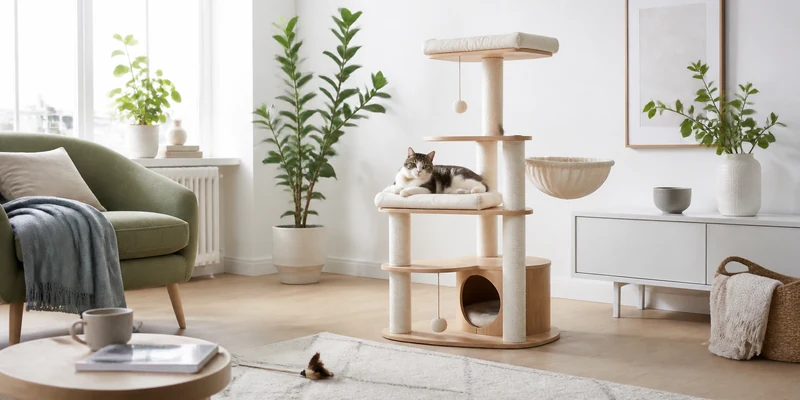
An aesthetic cat tree is what you are looking for when the tower in your living room has to earn its place in photos as well as in your cat’s daily routine. Most people start the search after saving a few Instagram or Pinterest rooms where the cat furniture blends into a warm, styled space instead of sitting in the corner in beige carpet. The good news is that the category has grown far beyond one or two boutique brands, and the looks now range from pale Scandinavian wood to boho jute, soft pastels, and sculptural cloud and flower shapes.
This guide sorts the styles that actually exist, explains which design choices are safe for your cat and which ones quietly cost you stability or scratching surface, and points to picks across the range. It also draws the line between an aesthetic tree and a strictly modern cat tree, because those two searches lead to different products more often than the listings admit.
This article contains affiliate links. If you buy through them, we may earn a commission at no extra cost to you. Learn more.
Quick Answer
What makes a cat tree aesthetic rather than just another tower?
- Three things do most of the work: a natural material (real or veneered wood, jute, rattan, bouclé), a color that belongs to your room rather than to the pet aisle, and a shape with some intention behind it.
- Aesthetic is broader and more playful than modern. Minimalist wood towers, boho jute posts, pastel platforms, and cloud or flower silhouettes all qualify; strict modern design usually means only the first.
- Style should never replace the basics. A wide base, a tall rigid sisal surface, and platforms sized for your actual cat still decide whether the tree gets used.
Aesthetic Cat Tree Styles at a Glance
Almost everything sold as an aesthetic cat tree falls into one of five looks. Use this to work out which one suits your room, and what each style tends to cost you on the practical side.
| Style | What it looks like | Suits | Trade-off to watch |
|---|---|---|---|
| Scandi minimal | Pale birch or oak-look frames, slim posts, cream or gray felt platforms | Light, uncluttered rooms; renters who want something unobtrusive | Slim frames can mean narrow perches and less sisal than a carpeted tower |
| Warm wood | Walnut or teak-tone panels, natural sisal, geometric platforms | Rooms with wood furniture already in them | Heavier and usually pricier; assembly matters more |
| Boho natural | Jute or hemp wrapped posts, rattan or cane panels, macramé and tassel detailing | Plant corners, layered textiles, neutral palettes | Jute sheds more than sisal and wears faster under a serious scratcher |
| Pastel and playful | Sage, blush, cream, or butter-yellow plush on light frames | Bedrooms, home offices, softer color schemes | Light colors show fur and dirt quickly; check what is removable and washable |
| Statement shapes | Cloud, flower, mushroom, or tree silhouettes with sculpted platforms | Photo-forward rooms and playrooms; a focal point rather than a background piece | Novelty shapes sometimes trade usable perch area for outline |
If you want the wider category first, our hub on cat trees covers sizes, materials, and construction across every style, and modern cat furniture maps the design-led corner of the market as a whole.
Aesthetic Versus Modern: Not the Same Search
The two words get used interchangeably in product titles, but shoppers mean different things by them. Modern is a design language with rules: clean lines, restrained color, honest materials, as little decoration as the piece can get away with. A modern tree is usually wood and neutral fabric, and it aims to disappear into a well-edited room.
Aesthetic is looser. It describes anything that photographs well and fits a chosen mood, which leaves room for warmth, texture, and whimsy that strict modern design would reject. A jute-wrapped tower draped with a knitted throw is aesthetic and not especially modern. A flower-shaped tower in sage green is very aesthetic and not modern at all.
So if your room is minimal and you want the tree to recede, start with the modern cat tree roundup instead. If you want a piece with personality that still coordinates, stay here. Either way, be skeptical of the word in listings, since “aesthetic” is now a keyword sellers add to ordinary gray towers.
Where Style and Cat Needs Collide
Design-led towers fail cats in fairly predictable ways, and all of them are avoidable if you know what to check.
- Scratching surface. Cats want a post tall enough to stretch out on fully, rigid enough not to sway, and covered in something coarse. Sisal rope and sisal fabric both work. Jute looks lovely and feels close, but it is softer and frays sooner. If a tree has one token post, plan on a separate sisal cat tree or a standalone post nearby.
- Base width versus height. The slim silhouettes that look best in photos are the ones most likely to rock when a cat launches off the top. Look for a base that is wide relative to the tower’s height, and use the anti-tip strap if one is included. Our guide to cat furniture safety covers anchoring and tip-over risk in detail.
- Perch size. Sculpted petal and cloud platforms photograph beautifully and are sometimes smaller than they appear. A cat likes to sprawl, not perch on a saucer. Compare the platform dimensions against your cat’s body length rather than trusting the styled shot.
- Materials underneath. Wood veneer over engineered board is normal at this level and holds up fine; panel thickness and how the joints are fixed matter more, since threaded inserts outlast screws driven into particleboard. For the durable end of the range, see solid wood cat trees.
- Cleanability. Cream bouclé and pale felt look great and show everything. Removable, washable cushion covers beat a slightly nicer finish.
Our Top Picks at a Glance
How we chose: we compared widely available design-led cat trees on stability, materials, usable perch space, scratching surface, and how convincingly the look lands in a real room. Selections are based on manufacturer specifications and the patterns that come up repeatedly in owner reviews, not on lab measurements.
Two things worth saying before the list. Design-forward towers cost more than carpeted equivalents for the same height, so decide first whether you are buying a focal point or a background piece. And if your cat is large or a committed scratcher, let platform size and post height outrank styling.
🏆 Best Overall
A pale wood frame with natural sisal and muted fabric, the Scandinavian look that suits the widest range of rooms. A safe single-piece answer if you want the tree to coordinate rather than shout.
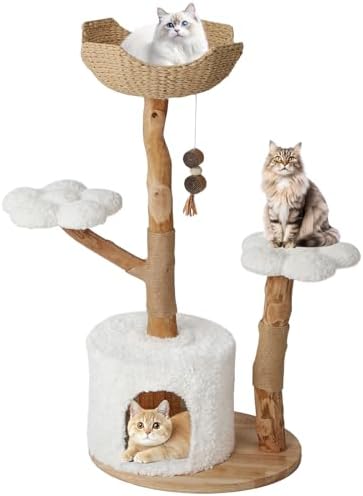
💛 Best Value
A light wood frame with neutral platforms, the most accessible way out of beige carpet. Expect simpler hardware, so tighten everything properly at assembly.
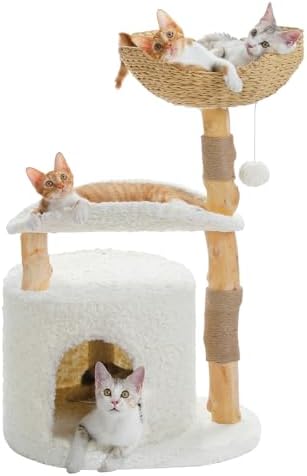
⭐ Upgrade Pick
A floor-to-ceiling design tree you adjust yourself, so the shape follows your room and your cat’s route rather than a fixed template. The most styled-looking option here.

Softer Shapes: Boho, Pastel, and Statement Silhouettes
The picks above are the safe, room-neutral end of the category. The looks that actually fill Pinterest boards are usually softer and more playful, and they work best when the tree is meant to be seen rather than tucked away.
🌿 Best for Plant Corners
Natural fiber wrapping and cane or rattan detailing, so the tower sits comfortably among plants and woven baskets. Check the post covering, since jute wears faster than sisal under a heavy scratcher.

🌸 Best Statement Piece
A flower or cloud silhouette with sculpted platforms in soft, muted colors. Fun to look at and genuinely usable, provided the platforms are deep enough for your cat to lie down on.

One caution on both. Novelty shapes and soft fibers tend to come from smaller sellers where construction varies, so read owner feedback on wobble and on how the covering holds up. If a piece has almost no real scratching surface, treat it as a climbing and napping structure and put a proper post beside it.
Small Apartments, Rentals, and Shared Rooms
In a studio or a one-bedroom, the tree is furniture whether you want it to be or not, which is exactly why the aesthetic version is worth the extra outlay. Two adjustments help. Favor a narrow footprint with real height over a wide multi-level base, since vertical space is what apartments have going spare. And pick a finish that matches something already in the room, usually your floor or your largest wood piece, so the tower reads as intentional.
Renters have one extra constraint: anchoring. If your lease rules out wall screws, avoid tall narrow towers you cannot secure and choose a lower tree with a generous base instead. Our guide to cat furniture for renters covers the workarounds, and small cat trees compares compact options. A wall-mounted setup is often the most photogenic answer of all, since nothing sits on the floor; our roundup of wall mounted cat trees covers stud requirements and weight limits before you start drilling.
Multi-Cat Homes and Larger Cats
Design-led trees are usually built around an average cat, and that assumption breaks quickly with a Maine Coon or with three cats who all want the top perch. For a big cat, check platform depth and the diameter of any tunnel or hideaway opening, since sculpted shapes are frequently the tightest; our roundup of trees for large cats covers the sizing that matters.
In multi-cat homes, spreading vertical territory across two smaller pieces usually beats one tall tower, because a single good perch creates standoffs. Two coordinated trees in the same finish also look more deliberate than one oversized one. See cat trees for multiple cats for layouts that reduce friction.
Placement, Assembly, and Keeping It Looking Good
Placement decides usage more than any feature on the box. Cats use elevated furniture most when it overlooks something worth watching, so a window view or the room where your household actually sits will beat a tidy hallway corner every time. Our guide on where to place a cat tree goes through the room-by-room logic.
Assembly is where slim, good-looking towers are won or lost. Fit every bolt loosely first, square the frame, then tighten in stages so the panels stay aligned. Check the fasteners again after a week or two and then once a season, since a small amount of loosening is what turns a solid tree into a wobbly one.
Upkeep is simple but not optional if the piece is on display. Wipe veneer with a barely damp cloth and dry it right away, because standing moisture lifts veneer edges. Vacuum sisal and jute with an upholstery attachment and trim loose fibers with scissors rather than pulling them, which unravels the wrap. Wash removable covers on a gentle cycle and rotate the cushions.
Common Mistakes to Avoid
- Buying from the styled photo alone. Product shots are lit and staged, and a perch that looks generous next to a small cat may not fit yours. Read the dimensions.
- Treating “aesthetic” as a specification. It is a keyword sellers add. Look for the actual materials, panel thickness, and post covering.
- Skipping the scratching surface. A gorgeous tree with a token post will not save your sofa arm. Pair it with a proper post if needed.
- Choosing pale everything. Cream and blush look wonderful for about a month with a shedding cat. Prioritize removable covers.
- Ignoring the anchor strap. Especially with tall, slim silhouettes, kittens, or a heavy cat who lands hard.
- Matching the room but not the cat. A cat who does not use a tree is just a sculpture, so let height, stability, and perch size lead.
Where to Go From Here
If your room leans minimal, compare this list against our modern cat tree roundup. For a warmer, retro palette with tapered legs, mid century modern cat furniture covers the trees, condos, and litter cabinets in that language. To see which companies genuinely design for looks rather than adding a keyword, start with designer cat furniture brands. And if nothing matches your palette, a DIY cat tree is more achievable than it sounds.
Frequently Asked Questions
Are aesthetic cat trees worse for cats than regular ones? Not inherently. Problems come from specific compromises, mainly small platforms, thin token posts, and narrow bases. A design-led tree that gets height, stability, and sisal right serves a cat just as well as a carpeted tower.
What is the difference between an aesthetic and a modern cat tree? Modern is a specific design language: clean lines, neutral color, minimal decoration. Aesthetic is broader and includes boho, pastel, and sculptural shapes. See our modern cat tree guide if you want the stricter look.
Is jute or sisal better for the posts? Sisal is coarser and more durable, so it holds up better under a determined scratcher. Jute is softer and suits the boho look, but expect more shedding and a shorter life on the posts that get the most use.
Will a light-colored tree get filthy? It will show fur and dust sooner than a mid-tone one. Choose removable, washable covers, vacuum weekly with an upholstery attachment, and consider a mid-tone wood with light cushions rather than pale everything.
Can I make a plain tree look better instead of replacing it? To a point. Rewrapping posts with fresh sisal, swapping cushion covers for neutral fabric, and moving the tree next to a plant or a window all help. A beige carpeted body is harder to disguise.
Do these trees work for a Maine Coon? Some do, but many design-led models are sized for an average cat. Check platform depth and opening widths first, starting with our cat trees for large cats roundup.
The Bottom Line
An aesthetic cat tree is worth buying when it earns its spot in the room and still gives your cat height, a stable base, and a scratching surface worth using. Pick the style that matches something already in your space, whether that is warm wood, pale Scandi, boho jute, or a soft statement shape, then check the platform sizes and the base width before the finish. Style and function only conflict when you let the photo make the decision.