Last updated: August 8, 2026
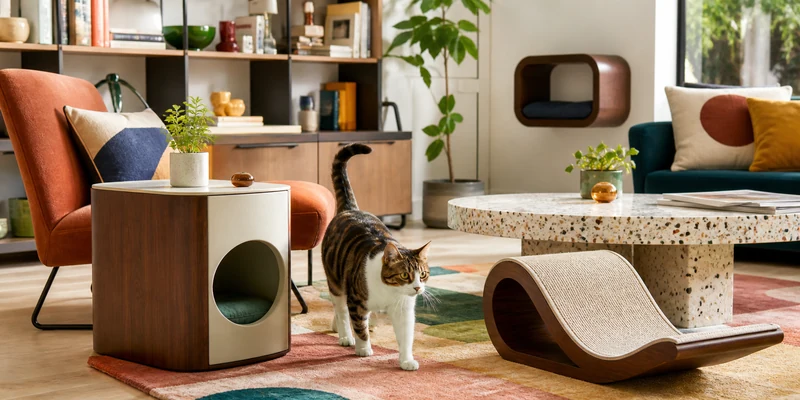
Shopping for the best modern cat furniture usually starts with a compromise you would rather not make. Your cat needs height, a rough surface to scratch, a warm place to sleep and a view of the street. The pieces that deliver all of that tend to arrive wrapped in beige carpet, with a silhouette that fits a pet store aisle far better than a living room.
Modern cat furniture solves the same functional problems in wood, felt, powder coated steel or molded plastic, with cleaner lines and finishes that read as furniture rather than pet gear. This guide explains what actually separates design led pieces from the mass market version, where the extra money goes, and which combination of pieces makes sense for your cat and your space. You will find premium picks alongside a couple of affordable options that get most of the way there.
This article contains affiliate links. If you buy through them, we may earn a commission at no extra cost to you. Learn more.
Quick Answer
What should you look for in modern cat furniture?
- Real materials over printed finishes: solid or veneered wood, dense felt, natural sisal and steel hardware age better than carpet over particle board.
- Function first. A sculptural piece your cat ignores is decor, not cat furniture, so check the platform size, the scratching height and how stable the base is.
- Spend on the pieces your cat uses daily, usually the main climbing tower and the scratcher, and go affordable on beds and secondary perches.
Modern Cat Furniture at a Glance
Most homes do not need one large piece. They need three or four smaller ones placed where the cat already spends time. This overview shows what each type contributes and the design trade off that comes with it.
| Piece | What it gives your cat | Where it fits | Design trade off |
|---|---|---|---|
| Modern cat tree or tower | Height, lookout points, scratching and napping in one footprint | Corner of a living room, beside a window | The most visible piece, so material quality matters most here |
| Designer scratching post | A full body stretch and a legitimate target for claws | Near sleeping spots and near the couch your cat targets | Slim styling can mean a shorter post or a lighter base |
| Wall shelves and steps | Vertical territory without using any floor space | Above furniture, along a hallway wall | Needs drilling and stud awareness, harder for renters |
| Modern cat bed | A defined, warm place to sleep off the floor | Anywhere the sun lands, or beside your own seat | Sculptural shapes are not always the sizes cats prefer |
| Litter box cabinet | A private, enclosed spot for the box | Bathroom, hallway, laundry area | Enclosure can trap odor if ventilation is poor |
| Window perch | The single best view in the house | Any window your cat already stares out of | Mounting style limits which windows work |
Starting from nothing? A tower and a scratcher cover most daily use. Beds, shelves and perches are what you add once you see where your cat actually settles.
What Actually Makes Cat Furniture Modern
The word modern gets attached to almost anything with a wood grain sticker on it, so it helps to be specific. Three things separate genuinely design led pieces from mass market towers with a style upgrade.
- Material honesty. Solid wood, plywood with a real veneer, wool or recycled PET felt, natural sisal rope and metal fittings. Printed melamine over particle board can look convincing in photos, but it chips at the edges and the print pattern repeats.
- Restrained silhouette. Fewer levels, cleaner geometry, visible legs instead of a full boxed base, and a limited color palette. Most premium pieces have less going on than a typical tower, not more.
- Considered hardware. Bolt through construction, threaded inserts and replaceable scratching sleeves instead of staples and glue. This is also what makes a piece worth reassembling after a move.
Brand positioning follows the same split. Tuft + Paw, The Refined Feline and Hepper design for people who want the piece visible in a main room, with small, deliberate catalogs. Mass market brands such as Feandrea, Yaheetech and Vesper compete on features and finish variety instead, and a mixed setup is often the sensible outcome. Our guide to designer cat furniture brands breaks down who makes what.
The Details That Decide Whether Your Cat Uses It
A beautiful piece that your cat walks past is a very expensive sculpture. Owners who report the best results tend to have checked the same handful of specifics before buying.
- Scratching height. Cats stretch vertically when they scratch, and posts that are too short get ignored in favor of the sofa arm. An adult cat should be able to reach up with front legs fully extended.
- Platform size. A cat sleeping on a perch curls into a circle, so a platform that fits a cat standing may not fit a cat sleeping. Larger breeds need noticeably more room than the marketing photos suggest.
- Base stability. Wobble is the most common reason a tower goes unused, and a wide, weighted base matters more than total height. Our cat furniture safety guide covers tip over risk and anchoring.
- Surface texture. Natural sisal rope and sisal fabric hold up to claws far better than carpet, which shreds and then stops being satisfying.
- Cleaning reality. Removable, washable cushion covers are worth more over three years than almost any styling detail.
Not sure whether your cat needs a full tower at all? This look at whether cats really need a cat tree works through it.
Our Top Picks at a Glance
How we chose: we compared design led and affordable modern pieces on materials, base stability, scratching surface, platform size and how well the finish holds up in a shared living space. Availability and finish options change often, so check current listings before deciding.
Two things worth saying up front. Premium does not mean fragile here, and several of these pieces are heavier than the mass market alternatives. And you do not need the whole set: one well chosen tower plus a scratcher usually changes a cat’s behavior more than four mediocre pieces would.
🏆 Best Overall
A sculptural wooden tower with a genuinely modern profile, sized so an adult cat can actually settle on the platforms. A sensible choice if you want one visible piece in a main room.

💛 Best Value
Walnut toned panels and cozy cube hideaways at a fraction of the premium tier. A reasonable entry point if you want the look without the design brand markup.

⭐ Best for Larger Cats
A real wood tower with an enclosed cave and a bed platform, built with the mass to suit bigger cats. Worth considering if the piece has to hold its own next to real furniture for years.

If a full tower is more than your space allows, a design led climbing piece is not the only route. A modern cat tree comparison and our aesthetic cat tree roundup go deeper on that category alone.
Which Modern Pieces Fit Your Space
Studio and one bedroom apartments. Floor space is the constraint, so go vertical. A slim tower in a corner plus two or three wall mounted steps gives more usable territory than one wide unit. If drilling is not an option, tension mounted and freestanding designs exist, and our guide for renters covers what works without damaging walls.
Open plan living rooms. Here the piece is on display from every angle, so back panels and cable style details matter. Pieces with visible legs sit better next to mid century furniture, and a matched wood tone across the tower, the scratcher and the litter cabinet does more for the room than any single expensive item. If that is your look, the mid century modern cat furniture roundup narrows it down.
Multi cat households and large breeds. Cats share vertically rather than horizontally, so two mid height pieces in different rooms usually beat one tall tower, and each cat wants a route down that does not pass another cat. Maine Coons, Ragdolls and Bengals also need wider platforms and a heavier base, and several design led pieces are built to a smaller scale, so check dimensions rather than trusting the photos.
Modern Picks for Specific Rooms and Problems
Once the main climbing piece is sorted, these tend to come next. Each solves a specific problem rather than duplicating what the tower already does.
🛋️ Best for Living Rooms
A low profile bed with a soft bowl and slim wooden legs, designed to sit beside a sofa without looking out of place. The washable insert is the part owners mention most.

🧺 Best for Hiding the Litter Box
An enclosed cabinet that turns the litter box into a side table sized piece of furniture, with a side entry for your cat and a furniture front that opens for scooping. Check the interior dimensions against your box before ordering.

🧱 Also Great
Wall mounted steps and perches that add vertical territory in a hallway or above existing furniture, with a natural wood finish rather than carpet. Best when you can hit studs or use proper anchors.
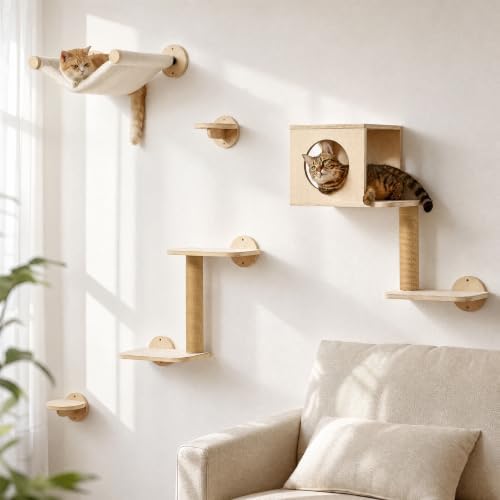
Looking specifically at one of these categories? Start with the dedicated guides to modern cat beds, litter box furniture and cat wall shelves.
Placement, Assembly and Keeping It Looking Good
Placement. Put the piece where your cat already goes. A tower against a window with a view of a bird feeder gets used constantly, while the same tower in a spare room does not. Scratchers belong next to sleeping spots, because cats stretch and scratch on waking, and next to whatever furniture they are currently targeting.
Assembly. Tighten every bolt in stages rather than fully tightening one side first, then check the fasteners again after a week. Wood expands and contracts with humidity, so a tower that felt solid on day one can develop a small wobble. Tall pieces deserve a wall anchor, especially with an enthusiastic jumper in the house.
Maintenance and introduction. Vacuum felt and sisal with an upholstery attachment rather than a beater bar, and wipe wood with a barely damp cloth. When a sisal post frays past the point of being satisfying, rewrapping kits are far cheaper than a new piece. To introduce it, put a familiar blanket on a platform and give your cat a week before concluding the piece was a mistake.
Common Mistakes When Buying Design Led Cat Furniture
- Buying for the photo, not the cat. If the platforms are too small or the post is too short, styling will not rescue it. Measure your cat stretched out and compare that to the listed dimensions.
- Assuming premium means stable. Some minimalist designs use narrow bases on purpose. Height plus a narrow base plus a heavy cat is the combination that leads to tipping, so anchor it.
- Choosing carpet because it is cheaper. Carpet covered surfaces shed, mat and stop appealing to claws. Sisal and cardboard both outlast it.
- Putting the litter cabinet in a sealed corner. Enclosure without airflow concentrates odor. Leave the back off the wall or pick a design with ventilation, and keep scooping daily.
- Expecting one piece to fix scratching. Cats need a scratching option near each problem area, so if the couch is the target the post has to be right there at first. Our guide on how to stop a cat from scratching furniture walks through it.
Where to Go Next
If you have narrowed things down to a brand, the individual reviews go further than a roundup can: the Tuft + Paw review, the Refined Feline review and the Hepper review. If a climbing piece is what you actually need, the full cat tree buying guide compares every category, and the modern scratching post roundup keeps the design bar high without losing function.
Frequently Asked Questions
Is modern cat furniture worth the extra money? It depends on where the piece lives. For a tower or scratcher in a main room that gets used every day, better materials and hardware usually justify the spend. For a spare bedroom perch, an affordable option is often the sensible call.
Will my cat actually use a minimalist design? Usually yes, provided the functional details are right: a tall enough scratching surface, platforms large enough to curl up on, and a stable base. Cats respond to placement and texture far more than to styling.
What is the difference between a cat tree and a cat condo? A tree emphasizes vertical climbing and lookout perches, while a condo is a boxier enclosed unit with cubbies. The comparison is covered in cat condo versus cat tree.
Can I use modern cat furniture in a rental? Yes, though wall mounted pieces are harder. Freestanding towers, floor standing posts and window perches with non permanent mounts all work without drilling.
How many pieces does one cat need? A common starting point is one climbing piece, one vertical scratcher and one defined sleeping spot, then adding a window perch or wall steps based on where your cat gravitates.
The Bottom Line
Modern cat furniture works when the design restraint sits on top of the functional basics rather than replacing them: real materials, a stable base, a tall enough scratching surface and platforms sized for a sleeping cat. Spend on the one or two pieces your cat uses daily and keep the rest affordable. Place everything where your cat already chooses to be, and the styling takes care of itself.